
Film colour grading is one of the final creative stages in filmmaking, where the visual appearance of a movie is carefully refined to create a consistent look and support the story. After filming and editing, individual shots may contain differences in exposure, colour balance, contrast and lighting that need to be corrected before the film is ready for its audience.
Colour grading goes beyond simply making an image look attractive. A carefully developed colour treatment can influence the mood of a scene, establish a particular time or place, distinguish characters or locations and strengthen the emotional connection between the audience and the story.
The process usually begins with technical colour correction and continues into creative grading, where the colourist works with the director and cinematographer to establish the visual character of the finished film.
What Is Film Colour Grading?
Film colour grading is the process of adjusting and refining the colour, brightness, contrast and overall appearance of filmed footage.
A colourist works with the final edited footage and makes adjustments that help create visual consistency throughout the movie.
The process can involve:
- Exposure
- White balance
- Contrast
- Saturation
- Colour balance
- Skin tones
- Highlights
- Shadows
- Colour temperature
- Overall visual style
The objective is to make individual shots work together while creating a visual treatment that supports the filmmaker’s creative direction.
Why Is Colour Grading Important in Film?
Colour has a strong influence on how audiences perceive images.
A warm colour palette may create feelings of comfort, nostalgia or intimacy, while cooler tones can suggest isolation, tension or distance.
Colour grading can help filmmakers:
- Establish mood
- Create visual consistency
- Support storytelling
- Strengthen emotional moments
- Highlight important characters
- Establish different environments
- Create a recognisable visual style
- Match shots from different takes
The process therefore combines technical accuracy with creative decision-making.
Colour Correction vs Colour Grading
Although the terms are often used together, colour correction and colour grading have different purposes.
What Is Colour Correction?
Colour correction focuses on making footage technically balanced and consistent.
A colourist may correct:
- Exposure
- White balance
- Colour casts
- Contrast
- Skin tones
- Differences between camera shots
The goal is to establish a clean and consistent starting point.
What Is Colour Grading?
Colour grading is the creative stage that follows correction.
The colourist develops a particular visual appearance by adjusting colour, contrast, saturation and other elements to match the desired mood and style.
In simple terms:
Colour correction makes footage consistent.
Colour grading gives the footage its visual character.
The Film Colour Grading Process
Colour grading is usually performed after the picture edit has reached an appropriate stage.
Preparing the Footage
The colourist receives the edited project and prepares the footage for grading.
The workflow may involve checking the source material, camera formats, colour space and technical requirements.
Balancing Exposure
Exposure differences between shots can make a sequence look inconsistent.
The colourist adjusts brightness and tonal values so that shots appear properly balanced.
Correcting White Balance
Different lighting conditions can introduce unwanted colour casts.
White balance adjustments help ensure that neutral objects appear natural and that skin tones remain believable.
Matching Shots
Scenes may contain footage recorded from multiple camera angles or under changing lighting conditions.
The colourist matches the shots so that cuts between them appear visually consistent.
Adjusting Skin Tones
Skin tones are particularly important because audiences are sensitive to unnatural changes in human appearance.
Colourists carefully adjust skin tones while maintaining the intended visual style.
Creating the Cinematic Look
Once the footage is technically balanced, the colourist begins developing the creative look.
This may involve changes to:
- Colour palette
- Contrast
- Saturation
- Highlights
- Shadows
- Colour temperature
The chosen look should complement the story and cinematography.
Applying the Final Grade
The final grade is refined across the complete film.
The colourist checks scenes in sequence to ensure that the visual treatment remains consistent from beginning to end.
What Does a Film Colourist Do?
A film colourist is responsible for refining the visual appearance of a movie during post-production.
The colourist works closely with the director and cinematographer to understand the intended visual style.
Their responsibilities can include:
- Colour correction
- Shot matching
- Exposure adjustments
- Skin tone correction
- Contrast control
- Colour palette development
- Creative grading
- Technical quality control
- Final colour preparation
The colourist combines technical knowledge with an understanding of visual storytelling.
How Colour Creates Mood in Film
Colour can communicate emotion without dialogue.
Warm Colours
Warm tones can create feelings of:
- Comfort
- Happiness
- Nostalgia
- Romance
- Energy
Cool Colours
Cool tones can suggest:
- Isolation
- Sadness
- Calmness
- Tension
- Distance
Desaturated Colours
Reduced colour can create a restrained, realistic or sombre appearance.
High Saturation
Strong colours can create a vibrant, energetic or stylised visual atmosphere.
The meaning of colour is not universal, however. Its effect depends on the story, context, lighting and cultural setting.
Understanding Colour Palettes in Movies
A colour palette is the range of colours that dominates the visual appearance of a film or particular sequence.
Filmmakers may use a specific palette throughout the movie or change it as the story develops.
For example, the visual treatment may become darker or less saturated as the story moves into a more serious stage.
Colour palettes can also distinguish:
- Different characters
- Different locations
- Different time periods
- Dreams and reality
- Past and present
- Different emotional states
This makes colour an important storytelling tool.
How Cinematographers and Colourists Work Together
Colour grading begins long before the footage reaches the colourist.
The cinematographer makes decisions about:
- Camera
- Lens
- Lighting
- Exposure
- Filters
- Production design
- Costume colours
These choices establish the visual foundation of the film.
During post-production, the colourist builds upon that foundation.
The cinematographer and colourist may work together to ensure that the final grade reflects the visual intention established during production.
Film Colour Grading Techniques
Professional colourists use a wide range of techniques to control the appearance of footage.
Primary Colour Correction
Adjusting the overall image balance.
Secondary Colour Correction
Targeting specific colours or areas of an image.
Skin Tone Isolation
Refining skin tones while leaving other parts of the image relatively unchanged.
Contrast Adjustment
Controlling the relationship between bright and dark areas.
Saturation Control
Adjusting the intensity of colours.
Colour Temperature
Moving an image toward warmer or cooler tones.
Selective Colour Adjustments
Changing particular colours to create a specific visual relationship.
Shot Matching
Ensuring that neighbouring shots maintain consistent colour and exposure.
Colour Grading for Different Film Genres
Different genres often use different visual approaches, although there are no strict rules.
Drama
Drama may use restrained colour and contrast to support emotional storytelling.
Horror
Horror films may use darker tones, reduced saturation or strong colour contrasts to create an unsettling atmosphere.
Science Fiction
Science-fiction films may use distinctive colour palettes to create futuristic or unfamiliar environments.
Romance
Romantic films may use warmer tones and softer visual treatments to support intimacy.
Action
Action films may use stronger contrast and carefully controlled colour to create energy and visual impact.
The grading should ultimately serve the individual film rather than simply follow genre conventions.
The Role of Contrast, Saturation and Exposure
Three important elements in colour grading are contrast, saturation and exposure.
Contrast
Contrast determines the difference between lighter and darker areas.
Saturation
Saturation controls the intensity of colours.
Exposure
Exposure affects the overall brightness of the image.
Adjusting these elements together can significantly change the appearance and emotional tone of a scene.
Film Colour Grading and Visual Effects
Colour grading and visual effects often need to work together.
Visual effects shots may contain computer-generated elements, green-screen footage or digitally composited backgrounds.
The colourist ensures that these elements integrate visually with the surrounding footage.
A final grade can also help create consistency across practical and digital elements.
Common Film Colour Grading Mistakes
Over-Grading
Too many colour adjustments can make footage appear unnatural.
Inconsistent Skin Tones
Skin tones that change noticeably between shots can distract the audience.
Excessive Saturation
Very strong colours can reduce natural detail and become visually distracting.
Poor Shot Matching
Differences between neighbouring shots can make editing feel less seamless.
Ignoring Exposure
Incorrect exposure can reduce detail in highlights or shadows.
Grading Without Considering the Story
A visually impressive grade may still be inappropriate if it does not support the film’s narrative or emotional direction.
Film Colour Grading Software and Technology
Modern colourists use specialised digital tools to analyse and manipulate images.
Professional workflows can include:
- Colour wheels
- Curves
- Masks
- Tracking
- Scopes
- LUTs
- HDR workflows
- Noise reduction
- Shot matching
- Colour management
Technology provides precise control, but the creative judgement of the colourist remains essential.
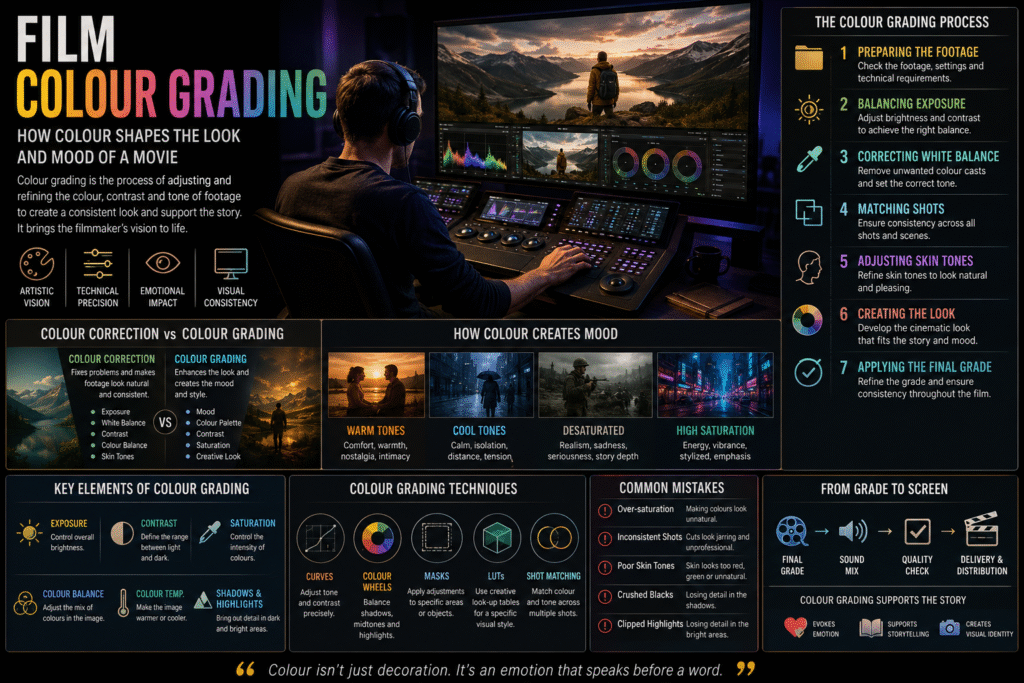
From Colour Grading to Final Film Delivery
Once the colour grade has been approved, the final picture can move toward mastering and delivery.
The completed film may require different versions for:
- Cinemas
- Streaming platforms
- Television
- Digital distribution
- International markets
- Festival screenings
Technical checks are performed to ensure that the final image meets the requirements of its intended release format.
The completed picture is then combined with the final sound mix and prepared for film distribution.
Final Thoughts
Film colour grading is where the visual identity of a movie is refined and completed.
The process begins with technical correction but extends far beyond fixing exposure or balancing colours. Through careful control of colour, contrast, saturation and tone, colourists help filmmakers create a visual language that supports the story.
A successful grade should work together with cinematography, production design, lighting, costumes, editing and sound rather than existing as an isolated visual effect.
Ultimately, colour grading gives filmmakers another way to communicate with audiences. A change in colour can suggest a different emotion, location, period or state of mind without requiring a single additional line of dialogue.
Primary Keywords
- film colour grading
- colour grading in film
- movie colour grading
- film colour correction
- cinematic colour grading
- colour grading process
- film colourist
- movie colour correction
Secondary Keywords
- colour correction
- cinematic colour
- film colourist
- colour grading workflow
- film visual style
- colour palette in film
- skin tone correction
- exposure correction
- contrast in film
- colour grading techniques
- post-production colour grading