
Production design is one of the most important yet often overlooked aspects of filmmaking. Before actors step onto a set or cameras begin rolling, production designers work behind the scenes to create the visual world in which the story unfolds. Every location, prop, costume, colour palette, and architectural detail contributes to building an environment that feels authentic and supports the film’s narrative. Whether it’s a historical drama, a futuristic science fiction adventure, or a fantasy epic, production design helps transport audiences into believable and immersive worlds.
In modern filmmaking, production design goes beyond decorating sets. It shapes the atmosphere, reinforces character development, and enhances storytelling by creating spaces that reflect emotions, culture, and time periods. Working closely with directors, cinematographers, costume designers, and visual effects artists, production designers ensure that every visual element supports the creative vision of the film. This article explores the importance of production design, its key elements, and how it continues to transform modern cinema.
What Is Production Design?
Production design is the process of planning and creating the overall visual appearance of a film, television show, or theatrical production. It involves designing sets, selecting locations, choosing props, coordinating colours, and developing environments that bring the screenplay to life. The production designer is responsible for ensuring that every visual component supports the story while maintaining consistency throughout the entire production.
Rather than focusing on individual scenes, production designers think about the film as a whole. They create a visual language that reflects the genre, historical period, culture, and emotional tone of the story. Every object placed on screen—from furniture and architecture to street signs and decorative details—is carefully selected to strengthen the audience’s connection to the narrative.
Why Production Design Matters in Filmmaking
Production design plays a crucial role in storytelling because it creates the world where the characters live, interact, and evolve. A thoughtfully designed environment provides context that helps audiences understand the setting, time period, and emotional atmosphere without requiring additional dialogue or narration. It allows viewers to become fully immersed in the story.
Excellent production design also enhances a film’s visual identity. Unique locations, carefully designed interiors, and distinctive colour schemes make movies memorable and instantly recognisable. Whether portraying an ancient kingdom, a bustling modern city, or a distant planet, production design gives filmmakers the creative freedom to build convincing worlds that support the emotional impact of every scene.
Key Elements of Production Design
Production design consists of several interconnected elements that work together to create a cohesive cinematic experience. Set design determines the physical spaces where scenes take place, while props provide realistic objects that characters interact with during the story. Furniture, artwork, vehicles, signage, and everyday items all contribute to making environments feel authentic.
Colour palettes, textures, lighting coordination, and architectural styles are equally important. Production designers carefully select materials and visual themes that reflect the mood of the film. Costumes and makeup often complement the production design, ensuring that characters naturally blend into the environments around them. Together, these elements create visually rich worlds that support storytelling and maintain consistency throughout the film.
How Production Designers Collaborate with Directors and Cinematographers
Production design is a highly collaborative process that requires close communication between multiple creative departments. Directors establish the artistic vision for the film, while production designers translate that vision into physical and digital environments. Through concept art, sketches, mood boards, and location planning, they work together to define the overall visual style before filming begins.
Cinematographers also play a vital role in this collaboration. Camera angles, lighting techniques, and lens choices must complement the production design to achieve the desired cinematic effect. Regular coordination between production designers and cinematographers ensures that every set is designed not only for visual beauty but also for practical filming requirements, allowing the story to unfold naturally on screen.
Creating Realistic and Fantasy Worlds Through Production Design
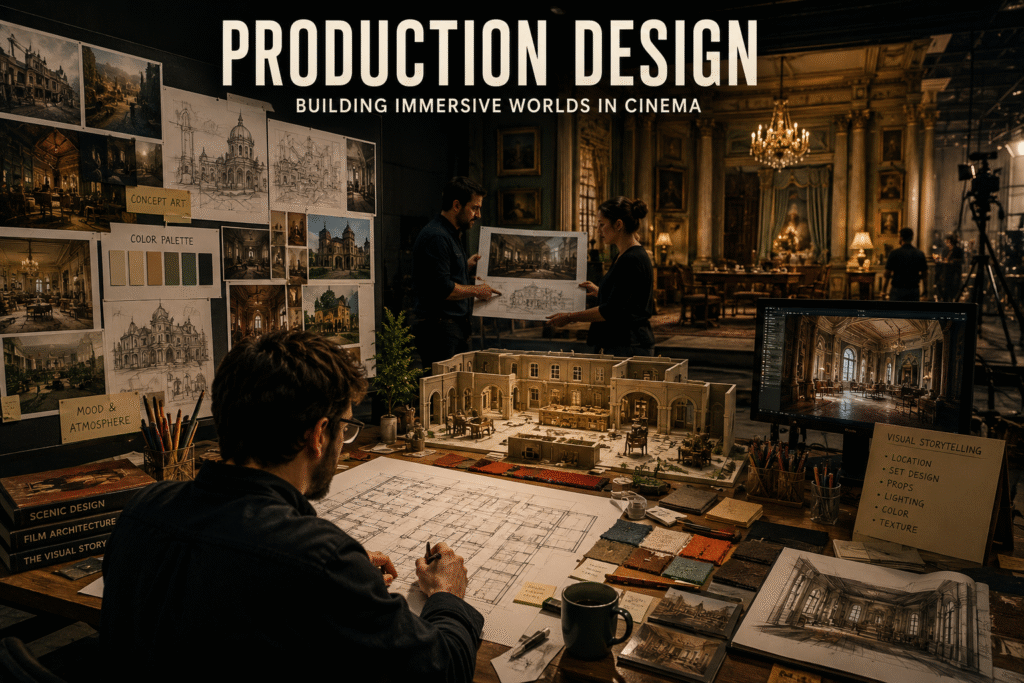
One of the greatest strengths of production design is its ability to create both realistic and imaginary environments. Historical dramas rely on extensive research to accurately recreate architecture, clothing, furniture, and cultural details from specific time periods. These carefully crafted settings help audiences believe they have travelled into another era.
Fantasy and science fiction films push creativity even further by designing entirely new worlds filled with unique landscapes, futuristic technology, magical kingdoms, and fictional civilizations. Production designers combine practical sets with digital technology and visual effects to create immersive environments that feel believable despite existing only in imagination. Their work allows filmmakers to tell stories without the limitations of real-world locations.
The Difference Between Production Design and Set Decoration
Although production design and set decoration are closely related, they have different responsibilities within a film production. Production design focuses on the overall visual concept of the movie, including architecture, layouts, locations, colour schemes, and artistic direction. The production designer oversees the complete visual identity of the film from pre-production to completion.
Set decoration is a specialised part of production design that involves furnishing and decorating individual sets. Set decorators select furniture, artwork, curtains, plants, books, and decorative accessories that make each environment appear lived-in and believable. While production designers establish the creative vision, set decorators bring those spaces to life with carefully chosen details that enrich the storytelling.
Famous Movies Known for Outstanding Production Design
Many iconic films are remembered not only for their stories but also for their extraordinary production design. Epic historical dramas recreate ancient civilizations with remarkable accuracy, while fantasy adventures transport audiences to magical kingdoms filled with imaginative architecture and breathtaking landscapes. Science fiction films often feature futuristic cities, advanced technology, and visually stunning environments that inspire generations of filmmakers.
Award-winning productions demonstrate how production design influences audience engagement and emotional impact. Carefully designed sets become memorable characters in their own right, helping define the identity of a film and contributing significantly to its critical and commercial success. Exceptional production design continues to set new standards for creativity and innovation within the film industry.
Challenges Faced by Production Designers
Production designers face numerous challenges while balancing creativity with practical limitations. Budget constraints often require innovative solutions that achieve impressive visual results without excessive spending. Time pressures during pre-production also demand efficient planning, as sets must be designed, built, and prepared before filming begins.
Another challenge involves maintaining historical accuracy or visual consistency across multiple filming locations. Designers must coordinate with construction teams, costume departments, cinematographers, and visual effects artists to ensure that every detail aligns with the director’s vision. Adapting to changing scripts, weather conditions, and production schedules requires flexibility, problem-solving skills, and strong teamwork.
The Future of Production Design with Digital Technology
Digital technology is transforming production design by expanding creative possibilities and improving production efficiency. Virtual production, real-time rendering, three-dimensional modelling, and digital previsualisation enable designers to create and test environments before physical construction begins. These technologies reduce costs, improve collaboration, and allow filmmakers to make informed creative decisions earlier in the production process.
Artificial intelligence, augmented reality, and virtual reality are also beginning to influence production design workflows. Designers can visualise entire film sets digitally, experiment with different layouts, and collaborate remotely with creative teams around the world. As technology continues to evolve, production design will become even more innovative, blending traditional craftsmanship with cutting-edge digital tools to create increasingly immersive cinematic experiences.
Conclusion
Production design is a fundamental pillar of filmmaking that shapes the visual identity, atmosphere, and emotional depth of every movie. Through carefully designed sets, thoughtfully selected props, detailed environments, and close collaboration with directors and cinematographers, production designers create believable worlds that draw audiences into the story.
As filmmaking continues to embrace digital innovation, production design remains a perfect balance of artistic creativity and technical expertise. Whether recreating historical settings or imagining entirely new universes, production designers play an essential role in transforming written scripts into unforgettable cinematic experiences. Their work reminds us that every great film begins with the creation of a world where stories can truly come to life.
Outbound Links
https://www.imdb.com/https://www.oscars.org/https://www.afi.com/https://www.blackmagicdesign.com/products/davinciresolve
Internal Links (Missing)
- The Evolution of Visual Effects (VFX): How Technology Transformed Modern Cinema
- The Art of Color Grading: How Colors Shape the Mood of Every Movie
- The Art of Film Editing: The Invisible Storyteller
- The Magic of Cinematography: How Camera Angles and Lighting Shape Every Movie
- How AI Is Changing the Future of Filmmaking