
Movie trailers are one of the most powerful marketing tools in the film industry. Long before a movie reaches theatres or streaming platforms, its trailer creates excitement, sparks curiosity, and encourages audiences to anticipate its release. In just a few minutes, a well-crafted trailer introduces the story, showcases memorable moments, and establishes the film’s tone without revealing too much. Whether it’s an action-packed blockbuster, an emotional drama, or a thrilling mystery, the trailer serves as the audience’s first impression of the movie.
Creating a movie trailer is both an art and a science. It requires careful planning, creative editing, engaging music, and strategic storytelling to capture viewers’ attention within seconds. Every scene, sound effect, and transition is selected with a specific purpose—to persuade audiences that the film is worth watching. In this article, we’ll explore how movie trailers are created, the techniques editors use to build excitement, and why trailers remain an essential part of modern film marketing.
What Is a Movie Trailer?
A movie trailer is a short promotional video designed to introduce an upcoming film and encourage audiences to watch it. Typically lasting between one and three minutes, a trailer highlights important moments, introduces the main characters, and provides a glimpse into the film’s story while intentionally avoiding major spoilers. Its primary goal is to generate interest and create anticipation before the movie’s official release.
Modern trailers combine carefully selected scenes, dramatic editing, background music, visual effects, dialogue, and text graphics to create an emotional connection with viewers. Rather than summarising the entire story, a trailer raises questions and builds curiosity, motivating audiences to discover what happens by watching the complete film.
The Purpose of Movie Trailers
Movie trailers play a vital role in the marketing strategy of every film. Their primary purpose is to attract attention, build excitement, and encourage audiences to purchase tickets or stream the movie upon release. A compelling trailer can significantly influence a film’s commercial success by creating buzz across social media, television, cinemas, and online platforms.
Beyond promotion, trailers also help establish audience expectations. They communicate the film’s genre, tone, visual style, and emotional experience, allowing viewers to decide whether the movie matches their interests. By creating anticipation weeks or even months before release, trailers become one of the most effective tools for building public awareness and engagement.
How Movie Trailers Are Planned
The creation of a movie trailer begins long before the final version is released. Marketing teams, producers, directors, and trailer editors work together to determine the trailer’s objective, target audience, and overall message. They analyse the film to identify the most engaging moments while ensuring the trailer accurately represents the story and its emotional impact.
Planning also involves deciding the trailer’s structure, pacing, music, and release schedule. Some films launch teaser trailers months before production is complete, while others release multiple trailers leading up to the premiere. Each version is carefully designed to reveal new information without diminishing audience curiosity.
Selecting the Best Scenes Without Revealing the Story
One of the biggest challenges in trailer production is choosing scenes that capture viewers’ attention while protecting the film’s major plot twists. Editors carefully select visually impressive moments, emotional dialogue, humorous scenes, or action sequences that generate excitement without revealing the complete narrative.
Maintaining suspense is essential. A successful trailer offers enough information to intrigue audiences but leaves important questions unanswered. By balancing excitement with mystery, trailer editors encourage viewers to experience the full story in cinemas or on streaming platforms rather than feeling they have already seen the movie.
The Editing Process Behind Movie Trailers
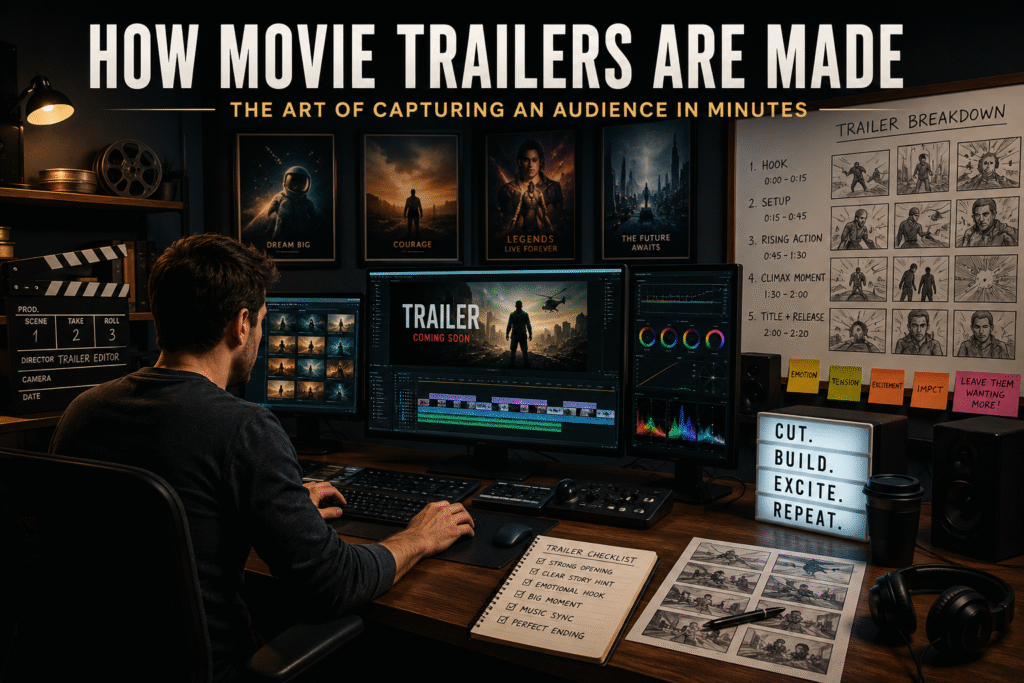
Editing is one of the most important stages of trailer production. Unlike feature films, trailers are designed to deliver maximum emotional impact within a very short timeframe. Editors review hundreds of scenes to identify moments that best represent the film while maintaining a fast-paced and engaging structure.
Carefully timed cuts, dramatic transitions, title cards, visual effects, and rhythmic pacing all contribute to creating excitement. Editors often rearrange scenes from different parts of the movie to improve storytelling without following the film’s chronological order. Every edit is intended to keep viewers engaged from the opening frame to the final shot.
The Importance of Music, Sound Effects, and Voiceovers
Audio plays a significant role in making movie trailers memorable. Powerful background music sets the emotional tone, whether it is suspenseful, inspirational, dramatic, or adventurous. Carefully selected sound effects enhance action sequences, emotional moments, and dramatic reveals, making the viewing experience more immersive.
Voiceovers and dialogue are equally important. While modern trailers use voiceovers less frequently than in the past, memorable lines spoken by the characters often become iconic promotional moments. Combined with music and sound design, these audio elements help trailers create excitement and leave a lasting impression on audiences.
Different Types of Movie Trailers
Movie marketing campaigns often include several different types of trailers, each serving a unique purpose. Teaser trailers are short promotional videos released months before a film’s premiere, offering only a brief glimpse of the story. Official trailers provide more detailed information about the plot, characters, and overall tone while still avoiding major spoilers.
Final trailers are usually released closer to the movie’s launch and highlight the film’s strongest moments to maximise audience interest. Some productions also create international trailers, television spots, and exclusive online previews tailored for different markets and promotional platforms.
How Movie Trailers Influence Audience Decisions
Movie trailers have a powerful influence on audience behaviour. For many viewers, the trailer is the deciding factor in whether they choose to watch a film. An engaging trailer can generate excitement, emotional investment, and positive word-of-mouth, encouraging people to share it across social media and discuss it with friends.
Trailers also shape expectations by communicating the film’s genre, visual quality, storytelling style, and overall entertainment value. A well-produced trailer creates confidence that the movie will deliver an enjoyable experience, increasing ticket sales, streaming views, and overall audience engagement.
Challenges of Creating an Effective Movie Trailer
Creating an effective movie trailer involves balancing creativity, marketing objectives, and audience expectations. Editors must generate excitement without revealing important story developments, while also accurately representing the film’s tone. Misleading trailers can disappoint audiences and damage the movie’s reputation after release.
Time limitations present another challenge. Compressing a two-hour film into a compelling two-minute promotional video requires exceptional editing skills and storytelling expertise. Editors must carefully evaluate every frame to ensure the trailer captures the essence of the movie while maintaining suspense and emotional impact.
The Future of Movie Trailers in the Digital Age
Digital technology is transforming how movie trailers are produced, distributed, and consumed. Social media platforms, streaming services, and video-sharing websites allow trailers to reach global audiences instantly, making online engagement an essential part of modern film marketing. Short-form promotional clips, vertical videos, and interactive campaigns are becoming increasingly popular as viewing habits continue to evolve.
Artificial intelligence is also beginning to influence trailer production by analysing audience preferences, recommending editing styles, and predicting viewer engagement. As technology advances, future trailers may become more personalised, interactive, and data-driven while continuing to serve as one of the most effective tools for promoting films worldwide.
Conclusion
Movie trailers are much more than short promotional videos—they are carefully crafted storytelling experiences designed to capture attention, create excitement, and inspire audiences to watch a film. Through strategic planning, creative editing, powerful music, and engaging visuals, trailers provide a compelling preview that builds anticipation while preserving the mystery of the story.
As the film industry embraces new technologies and digital marketing strategies, movie trailers continue to evolve alongside changing audience preferences. Whether viewed in cinemas, on television, or through online platforms, trailers remain one of the most influential elements of film promotion, connecting audiences with unforgettable cinematic experiences long before the opening scene begins.