
This is the most important next topic for your blog series because you now have articles covering financing, production management, production, editing, sound design, colour grading, VFX, marketing and distribution. A detailed film pre-production article connects the creative planning stage with the actual production stage.
Introduction
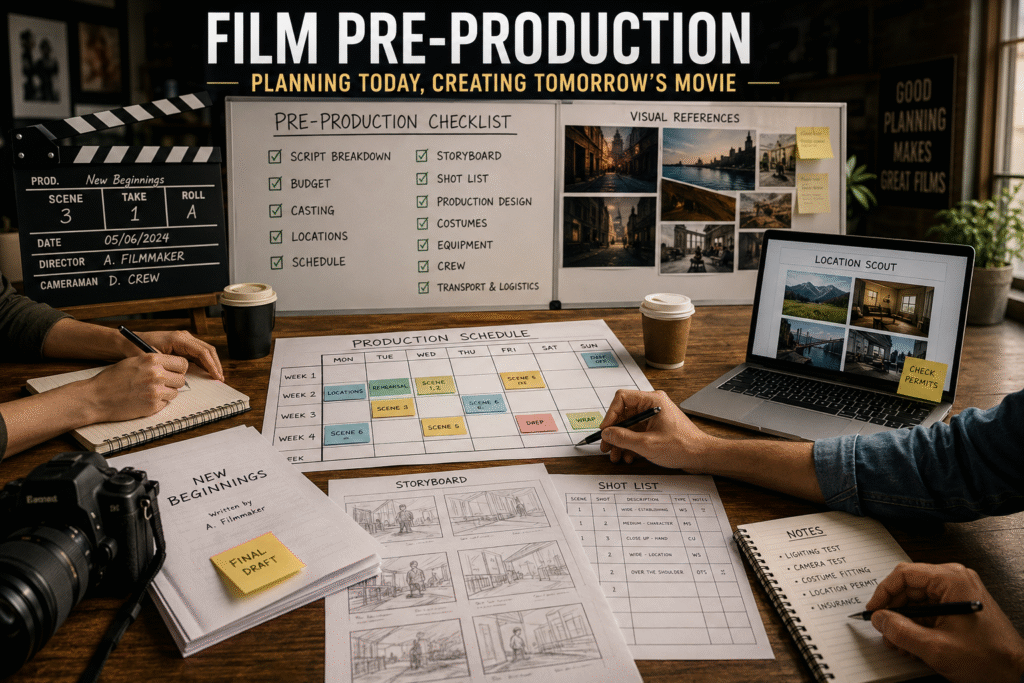
Film pre-production is the planning stage that prepares a movie for filming. Before the cameras begin rolling, filmmakers need to make important decisions about the script, cast, locations, budget, schedule, production design, equipment and crew.
A well-organised film pre-production process gives the production team a clear understanding of what needs to happen on set. It also helps identify potential problems before they become expensive or time-consuming during filming.
From breaking down the screenplay to preparing the final shooting schedule, pre-production connects the creative vision of a film with the practical requirements of making it.
What Is Film Pre-Production?
Film pre-production is the stage of filmmaking that takes place between developing the project and starting principal photography.
During this stage, the production team turns the screenplay and creative concept into a practical production plan.
The work can include:
- Script breakdown
- Budget preparation
- Scheduling
- Casting
- Location scouting
- Production design
- Costume planning
- Makeup planning
- Storyboarding
- Shot lists
- Camera planning
- Lighting preparation
- Sound planning
- Crew hiring
- Equipment preparation
- Transport and logistics
- Health and safety planning
The exact process varies depending on the size and type of production, but the purpose remains the same: prepare the film so that production can run as efficiently as possible.
Why Is Film Pre-Production Important?
A film set involves many people, departments and resources working at the same time.
Without proper preparation, small problems can quickly affect the shooting schedule and budget.
Effective film pre-production helps filmmakers:
- Understand the requirements of every scene
- Create realistic budgets
- Develop practical shooting schedules
- Prepare cast and crew
- Secure locations
- Organise equipment
- Plan visual and technical requirements
- Identify potential production risks
- Reduce unnecessary delays
- Coordinate different departments
Good preparation does not remove every problem from a film set, but it gives the team a better chance of handling unexpected situations.
The Film Pre-Production Process
The film pre-production process normally develops through several connected stages. Some tasks happen at the same time, while others depend on decisions made earlier.
Script Breakdown
The screenplay is one of the most important documents during pre-production.
The production team studies the script scene by scene and identifies everything required to shoot it.
A script breakdown may identify:
- Characters
- Locations
- Props
- Vehicles
- Costumes
- Makeup
- Special effects
- Visual effects
- Animals
- Stunts
- Background performers
- Day or night requirements
The breakdown helps the production team understand the scale and requirements of the project before creating the detailed schedule and budget.
Developing the Production Plan
Once the script has been analysed, the production team develops a broader plan for making the film.
The plan considers:
- Production dates
- Locations
- Cast availability
- Crew requirements
- Equipment
- Budget
- Travel
- Accommodation
- Production design
- Post-production requirements
This stage turns the screenplay into a practical roadmap for the production.
Creating the Film Budget
Budgeting is a major part of pre-production.
The producer and production team estimate the costs required to complete the project.
A film budget can include:
- Cast salaries
- Crew wages
- Equipment rental
- Locations
- Set construction
- Props
- Costumes
- Makeup
- Transportation
- Accommodation
- Catering
- Insurance
- Post-production
- Music
- Visual effects
- Marketing and delivery
A realistic budget should also consider unexpected expenses and appropriate contingency funds.
Building the Production Schedule
The production schedule determines when scenes will be filmed and how the available shooting days will be used.
Scenes are not necessarily filmed in the same order in which they appear in the screenplay.
Instead, the production may group scenes based on:
- Location
- Actor availability
- Equipment requirements
- Set requirements
- Weather
- Time of day
- Production efficiency
A carefully prepared schedule can reduce unnecessary travel, location changes and downtime.
Casting the Actors
Casting is another major responsibility during pre-production.
The casting team and director look for performers who suit the characters and the creative requirements of the project.
The process can involve:
- Casting calls
- Auditions
- Screen tests
- Shortlisting
- Callbacks
- Contract negotiations
Actor availability also needs to be considered when creating the final shooting schedule.
Finding and Preparing Locations
Location scouting involves finding places that suit the requirements of the screenplay and the director’s vision.
The production team may consider:
- Appearance
- Accessibility
- Permissions
- Parking
- Power
- Noise
- Crew facilities
- Equipment access
- Security
- Working hours
- Weather conditions
Once a location is selected, the team may need to obtain permission and prepare it for filming.
Developing the Visual Style
The visual style of a film is developed through collaboration between the director, cinematographer, production designer and other creative departments.
They may discuss:
- Colour palette
- Lighting style
- Camera movement
- Lens choices
- Framing
- Production design
- Costume
- Makeup
- Locations
These decisions give the production a consistent visual direction before filming begins.
Creating Storyboards and Shot Lists
Storyboards provide visual representations of important shots and sequences.
They can help the director and crew understand:
- Camera position
- Composition
- Character movement
- Action
- Transitions
- Important visual moments
A shot list provides a more practical breakdown of the shots required for each scene.
Both tools can help the production team communicate the director’s intentions more clearly.
Planning Production Design
Production design establishes the physical appearance of the film’s world.
The production design department may work on:
- Sets
- Props
- Furniture
- Decorations
- Locations
- Colour schemes
- Period details
The design needs to reflect the story, characters and overall visual direction of the film.
Costume and Makeup Planning
Costume and makeup departments prepare the appearance of the characters.
Costume planning can involve:
- Character wardrobes
- Period clothing
- Multiple costume changes
- Costume continuity
- Fittings
Makeup planning may include:
- Character makeup
- Hair
- Prosthetics
- Special makeup effects
- Continuity requirements
These departments need to coordinate closely with production design and cinematography.
Camera and Lighting Preparation
The cinematography team plans how the film will be photographed.
Preparation can include:
- Camera selection
- Lens selection
- Camera movement
- Lighting equipment
- Exposure approach
- Filters
- Framing
- Test shoots
Camera and lighting decisions should support the director’s visual vision while remaining practical for the production schedule.
Sound Planning
Sound should also be considered before filming begins.
The production sound team assesses:
- Microphone requirements
- Recording equipment
- Location noise
- Dialogue requirements
- Special sound considerations
- Room tone
- Difficult recording environments
Planning sound in advance can help reduce audio problems during post-production.
Crew Hiring and Department Coordination
A film requires many specialised professionals.
Depending on the production, the crew may include:
- Director
- Producer
- Production manager
- Assistant directors
- Cinematographer
- Camera operators
- Gaffers
- Sound recordists
- Production designers
- Costume designers
- Makeup artists
- Editors
- VFX artists
- Production assistants
During film pre-production, department heads are brought together so that everyone understands their responsibilities and how their work connects with other departments.
Equipment and Technical Planning
Equipment requirements should be confirmed before production begins.
This may include:
- Cameras
- Lenses
- Lighting
- Sound equipment
- Grip equipment
- Monitoring equipment
- Communication equipment
- Specialised production tools
The production team needs to ensure that equipment is available at the right location and on the right dates.
Creating Call Sheets
A call sheet contains important information about a specific shooting day.
It may include:
- Date
- Location
- Crew call time
- Cast call time
- Scenes
- Transport information
- Weather information
- Contact details
- Safety information
- Special instructions
Call sheets help the cast and crew understand what is expected during the shooting day.
Health and Safety Planning
Safety planning should be part of every professional production.
Potential risks may come from:
- Stunts
- Vehicles
- Weapons or props
- Electrical equipment
- Construction
- Working at height
- Special effects
- Crowds
- Difficult locations
- Weather
The production team should identify risks in advance and establish appropriate safety procedures.
Requirements vary depending on the location and type of production, so filmmakers should follow applicable laws, regulations and professional guidance.
Final Pre-Production Checks
Before filming begins, the production team reviews the major requirements one more time.
The final checks may cover:
- Cast
- Crew
- Locations
- Equipment
- Costumes
- Props
- Sets
- Schedule
- Call sheets
- Transport
- Accommodation
- Safety
- Production paperwork
This final review helps identify missing requirements before the first day of shooting.
What Does a Film Producer Do During film-pre-production-process?
The producer plays a central role in preparing a film for production.
During film pre-production, the producer may oversee:
- Financing
- Budgeting
- Hiring key personnel
- Scheduling
- Production planning
- Contracts
- Locations
- Production logistics
- Communication between departments
The producer also works with the director and other department heads to make sure creative goals can be achieved within the available resources.
What Does a Director Do During Pre-Production?
The director develops the creative approach to the film.
During preparation, the director may work on:
- Casting
- Rehearsals
- Shot planning
- Storyboards
- Camera approach
- Visual style
- Production design
- Costume
- Makeup
- Performance direction
The director also communicates the creative vision to the department heads so that everyone understands the intended direction of the film.
How Cinematographers Prepare for a Film
The cinematographer works with the director to establish how the film will look on screen.
Preparation may include testing:
- Cameras
- Lenses
- Lighting
- Filters
- Exposure
- Camera movement
- Aspect ratios
- Colour approaches
Location visits and camera tests can help the cinematographer anticipate technical challenges before shooting begins.
film-pre-production-process for Independent Filmmakers
For independent filmmakers, careful planning can be especially important because budgets and crew sizes are often limited.
A practical independent production plan should consider:
- Realistic shooting days
- Affordable locations
- Essential equipment
- Crew requirements
- Travel costs
- Accommodation
- Post-production
- Insurance
- Contingency funds
- Distribution requirements
A smaller budget does not mean that the creative ambition has to be small. It means the filmmaker needs to make deliberate decisions about where available resources will have the greatest impact.
Internal Links
- Film Screenwriting — https://enigmacelluloid.com/how-screenwriters-turn-ideas-into-blockbuster-movies/
- Film Financing — https://enigmacelluloid.com/
- Film Production Management — https://enigmacelluloid.com/
- Film Production — https://enigmacelluloid.com/
- Film Editing — https://enigmacelluloid.com/
- Film Sound Design — https://enigmacelluloid.com/sound-music-in-film/
- Film Colour Grading — https://enigmacelluloid.com/
- Film Visual Effects — https://enigmacelluloid.com/