
This is a strong topic after Film Financing because financing explains where the money comes from, while production management explains how the project is organised and controlled once it moves toward production. Production management commonly covers schedules, budgets, resources, departments, deadlines and operational coordination.
Introduction
Film production management is the process of organising the people, resources, schedules and practical requirements needed to take a film from preparation through production and toward completion. While the creative team develops the story and the financing team secures the required budget, production management turns those plans into an organised working process.
A film production involves many departments working at the same time. Cast and crew need to be scheduled, locations need to be prepared, equipment needs to be available and production expenses need to remain under control.
Effective film production management brings these responsibilities together and keeps the production moving according to its schedule and available resources.
What Is Film Production Management?
Film production management refers to the planning, coordination and operational control of a film production.
It connects the creative requirements of the project with the practical work required to complete it.
Production management can involve:
- Budget planning
- Production scheduling
- Crew coordination
- Location management
- Equipment planning
- Transportation
- Accommodation
- Production paperwork
- Health and safety
- Daily production operations
- Communication between departments
The exact responsibilities vary according to the size and type of production, but the overall objective remains the same: helping the production operate efficiently and complete its work within the agreed requirements.
Why Is Film Production Management Important?
A film can involve hundreds of people, multiple locations and a large number of production requirements.
Without proper coordination, even a well-funded project can experience delays, unnecessary expenses and communication problems.
Good film production management helps producers and department heads coordinate:
- People
- Time
- Money
- Locations
- Equipment
- Resources
- Production requirements
A detailed production plan also gives the team a clearer understanding of what needs to happen before filming begins.
Industry funding and production programmes commonly require production plans, schedules, budgets, locations and key crew information as part of project preparation.
The Main Responsibilities of Film Production Management
Production Planning
Production planning begins with understanding the screenplay and identifying everything required to make the film.
The production team analyses:
- Scenes
- Locations
- Cast
- Crew
- Props
- Costumes
- Vehicles
- Equipment
- Special requirements
This information becomes the foundation for scheduling and budgeting.
Production Scheduling
A shooting schedule determines when and where scenes will be filmed.
The schedule may consider:
- Actor availability
- Location availability
- Travel time
- Equipment
- Weather
- Day and night requirements
- Crew availability
- Production priorities
A well-prepared schedule helps the production make efficient use of its available time.
Budget Management
Production managers need to monitor spending throughout the project.
The budget may include:
- Cast
- Crew
- Equipment
- Locations
- Transportation
- Accommodation
- Catering
- Sets
- Costumes
- Insurance
- Post-production
Production management works closely with producers and finance teams to keep expenditure aligned with the approved budget.
Crew Coordination
A film requires different departments to work together.
Production management helps coordinate communication between:
- Direction
- Camera
- Sound
- Lighting
- Production design
- Costume
- Makeup
- Art department
- Transport
- Post-production
Clear communication reduces confusion and helps departments prepare for upcoming requirements.
The Role of a Film Production Manager
A film production manager is responsible for many of the practical and operational aspects of a production.
Depending on the production structure, responsibilities may include preparing budgets and schedules, coordinating departments, hiring production staff and suppliers, managing resources and monitoring production progress.
Production managers also work closely with producers, directors and department heads.
Screen Ireland’s production management guidance identifies scheduling, resource allocation, progress tracking, communication and anticipating production delays as important production management responsibilities.
Film Production Management Before Shooting
Much of the important production management work happens before the first day of filming.
Script Breakdown
The screenplay is analysed scene by scene to identify production requirements.
The breakdown may identify:
- Cast
- Locations
- Props
- Vehicles
- Costumes
- Special effects
- Stunts
- Animals
- Background performers
Location Planning
Locations need to be assessed for accessibility, permissions, facilities, parking, power and other practical considerations.
The production team also needs to consider how long the crew will need to work at each location.
Crew Planning
Key department heads and crew members are confirmed according to the requirements of the production.
The production team then coordinates their availability with the shooting schedule.
Equipment Planning
Camera, lighting, sound and other equipment must be available when required.
Equipment planning helps prevent delays caused by missing or unsuitable resources.
Creating a Film Production Schedule
A production schedule converts the requirements of the screenplay into a practical shooting plan.
Scenes are not always filmed in screenplay order.
Instead, production teams may group scenes based on:
- Location
- Cast availability
- Equipment requirements
- Set requirements
- Weather
- Time of day
- Production efficiency
The objective is to reduce unnecessary movement and make the best use of available production resources.
Managing a Film Production Budget
Budget management continues throughout production.
The production team tracks expenses against the approved budget and monitors areas where spending may change.
Unexpected expenses can result from:
- Weather delays
- Equipment problems
- Location changes
- Schedule changes
- Additional shooting days
- Crew requirements
- Technical problems
A production may therefore require regular budget reviews and adjustments.
Managing Locations and Logistics
Locations can create significant logistical requirements.
Production management may need to coordinate:
- Location permissions
- Parking
- Transport
- Crew access
- Equipment movement
- Catering
- Power
- Security
- Public access
- Working hours
Location planning becomes particularly important when a production moves between multiple cities or countries.
Daily Film Production Management
Once filming begins, production management becomes a day-to-day responsibility.
The team may monitor:
- Call times
- Crew attendance
- Shooting progress
- Schedule changes
- Equipment
- Locations
- Transportation
- Meals
- Safety requirements
- Production reports
Daily communication allows the team to respond quickly when circumstances change.
The Production Call Sheet
A call sheet provides important information about a particular shooting day.
It may include:
- Date
- Location
- Call times
- Cast requirements
- Scenes scheduled
- Crew information
- Transportation details
- Weather information
- Safety notes
- Contact information
The call sheet helps the cast and crew understand where they need to be and what is expected during the day.
Communication Between Film Departments
Large productions depend on effective communication.
Production management acts as an important coordination point between different departments.
For example, a change to the shooting schedule may affect:
- Actors
- Camera crew
- Lighting
- Sound
- Makeup
- Costume
- Production design
- Transport
- Catering
A production change therefore needs to be communicated quickly and accurately.
Health and Safety in Film Production
Safety is an important responsibility on any professional film set.
Production management needs to work with the relevant departments to identify hazards and establish appropriate procedures.
Potential risks can involve:
- Stunts
- Vehicles
- Electrical equipment
- Special effects
- Construction
- Locations
- Weather
- Crowds
- Working at height
Production safety requirements vary by location and production type, so filmmakers should follow applicable regulations and professional guidance.
Managing Changes During Production
Film productions rarely follow the original plan perfectly.
A location may become unavailable, weather may change or a technical issue may delay filming.
Effective film production management requires the ability to respond to these situations without losing control of the overall schedule and budget.
Production teams may need to:
- Reorganise scenes
- Adjust call times
- Move locations
- Reallocate resources
- Extend working periods
- Reschedule cast
- Revise the shooting plan
The objective is to solve the immediate problem while protecting the wider production schedule.
Film Production Management and Post-Production
Production management does not end simply because filming has finished.
The project still needs to move into:
- Film editing
- Sound design
- Visual effects
- Colour grading
- Music
- Quality control
- Final mastering
- Delivery
The production team needs to ensure that the project has the resources and information required to move into these stages.
Film Production Management for Independent Filmmakers
Independent filmmakers often work with smaller teams and tighter budgets.
This makes planning particularly important.
A practical independent production plan should consider:
- Realistic shooting days
- Location availability
- Crew size
- Equipment requirements
- Travel costs
- Post-production requirements
- Contingency funds
- Distribution deadlines
Good planning can help independent filmmakers avoid spending limited resources on avoidable problems.
Sustainable Film Production Management
Modern productions are also paying greater attention to environmental impact.
Production planning can consider:
- Transportation
- Energy use
- Temporary power
- Materials
- Catering
- Waste
- Location practices
The BFI’s current Independent Film Sustainability Handbook focuses on practical ways for independent productions to reduce environmental impact while working within real budget and scheduling pressures.
Sustainability planning can therefore be incorporated into production management rather than treated as a separate concern.
Common Film Production Management Challenges
Schedule Changes
Unexpected delays can affect multiple departments at once.
Budget Pressure
Additional production requirements can increase costs.
Communication Problems
Poor communication can lead to missed information and unnecessary delays.
Location Difficulties
Access, weather, permissions and logistical restrictions can affect filming.
Crew Availability
Changes in availability can require adjustments to the shooting schedule.
Equipment Problems
Technical problems can interrupt production and require alternative arrangements.
Last-Minute Changes
Creative decisions made during production can have practical consequences for scheduling and resources.
Film Production Management vs Film Producing
The terms are closely related but can describe different responsibilities.
A film producer generally oversees the project at a broader level, including creative, business, financing and strategic decisions.
A production manager focuses more directly on the practical organisation and day-to-day operational requirements of production.
On smaller productions, responsibilities may overlap.
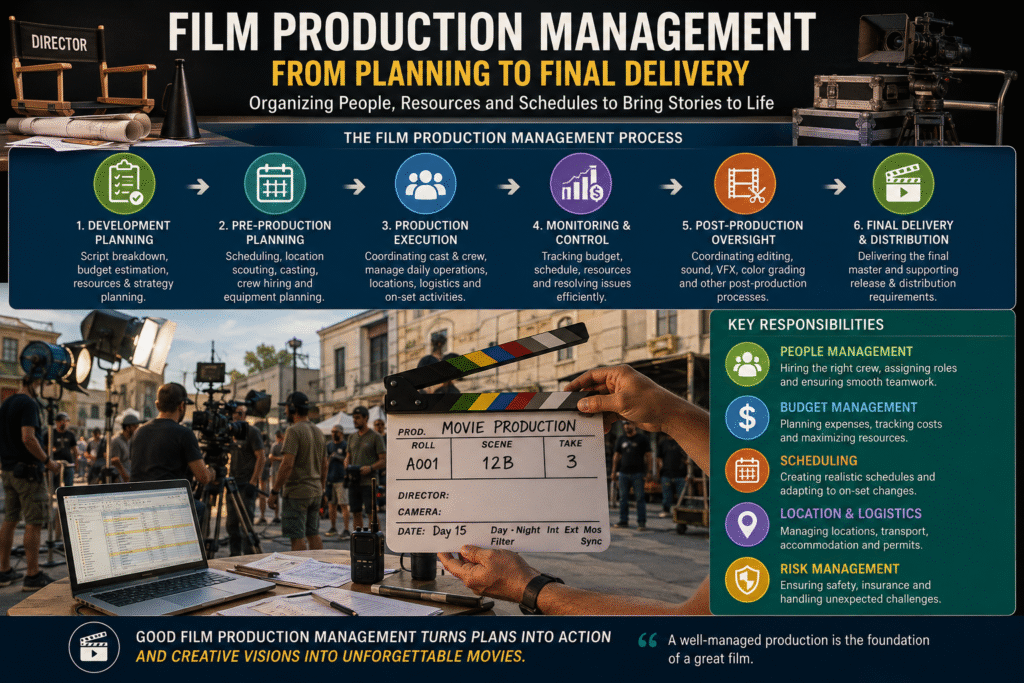
How Film Production Management Supports a Successful Shoot
Effective film production management creates a connection between the creative plan and the practical realities of filmmaking.
A production manager needs to understand what the director wants to achieve while also considering:
- Available budget
- Available time
- Crew resources
- Locations
- Equipment
- Safety
- Production limitations
When these elements are properly coordinated, the creative team has a better environment in which to work.
From Production Management to the Finished Film
Once principal photography is completed, the project moves into post-production.
The footage is edited, sound is designed, visual effects are completed and colour grading establishes the final visual appearance.
The finished project can then move toward marketing, distribution and release.
Production management therefore forms an important link between the original screenplay and the completed film.
Final Thoughts
Film production management is the organisational foundation that keeps a movie production moving.
It brings together scheduling, budgeting, crew coordination, locations, equipment, logistics, communication and daily production operations.
A strong production plan cannot eliminate every problem. Film sets are complex environments, and unexpected situations are part of the filmmaking process. What effective management provides is the ability to respond to those situations while keeping the wider project under control.
From the first script breakdown to the final day of filming, production management helps turn a creative plan into a practical and achievable production.