
Introduction
Movies are a powerful combination of storytelling, visuals, sound, and performances. Among all these elements, acting is what creates the emotional connection between the audience and the story. A talented actor can transform a fictional character into someone who feels real, relatable, and unforgettable.
Acting in movies is more than simply speaking dialogue in front of a camera. It requires understanding emotions, studying characters, expressing thoughts through body language, and creating believable human experiences. From dramatic performances that move audiences to action roles that inspire excitement, actors play a crucial role in bringing stories from the screenplay to the screen.
Behind every great performance is extensive preparation, collaboration, and creativity. Actors work closely with directors, writers, and other filmmakers to understand their characters and deliver performances that support the overall vision of the movie.
What Is Acting in Movies?
Acting in movies is the art of portraying fictional or real characters through emotions, dialogue, expressions, and physical performance. Unlike stage acting, movie acting requires actors to perform for the camera, where even small facial expressions and subtle movements can communicate powerful emotions.
Film actors must understand the character’s background, personality, motivations, and relationships to create a convincing performance. They use their voice, body language, expressions, and reactions to make audiences believe in the character’s journey.
A successful movie performance allows viewers to connect emotionally with the character and become invested in the story. Whether playing a hero, villain, or ordinary person, actors bring depth and humanity to every role.
How Actors Prepare for a Role
Preparing for a movie role requires extensive research and dedication. Actors often spend weeks or months studying their characters before filming begins. They analyse the screenplay, understand the character’s emotions, and explore the experiences that shape the character’s behaviour.
For certain roles, actors may learn new skills, change their appearance, study different cultures, or work with experts to make their performance more authentic. For example, an actor playing a historical figure may research real events, while someone playing a professional athlete may undergo physical training.
Preparation helps actors move beyond simply performing lines and allows them to fully understand and represent the character they are portraying.
Understanding Character Development
Character development is one of the most important aspects of acting. A well-developed character has emotions, goals, conflicts, and personal growth throughout the story. Actors study these elements to understand how their characters change from the beginning to the end of the movie.
Great actors focus on the character’s inner world, including fears, desires, relationships, and motivations. This understanding helps them make realistic choices during performances and create characters that audiences remember.
Through careful character development, actors transform written descriptions from a screenplay into complex personalities that feel authentic and emotionally engaging.
Different Acting Techniques Used in Cinema
Actors use various techniques to create realistic and powerful performances. Different approaches help performers understand emotions, reactions, and character behaviour.
Method Acting
Method acting focuses on deeply connecting with the character’s emotions and experiences. Actors often draw from personal memories or imagined situations to create realistic performances.
Classical Acting
Classical acting focuses on voice control, movement, and understanding dramatic structure. It is commonly associated with theatre traditions.
Meisner Technique
This technique emphasizes natural reactions and emotional responses between actors during scenes.
Improvisation
Improvisation allows actors to create spontaneous dialogue or actions, helping performances feel more natural.
Many actors combine different techniques to develop performances that match the needs of each role.
The Relationship Between Actors and Directors
The collaboration between actors and directors is essential for creating successful performances. Directors guide actors by explaining the emotional purpose of scenes, character motivations, and the overall vision of the film.
A strong director-actor relationship allows performers to explore different approaches and improve their portrayal of characters. Directors provide feedback on expressions, movements, dialogue delivery, and emotional intensity.
While actors bring characters to life, directors help ensure that performances align with the story and contribute to the film’s overall message.
How Actors Use Voice and Body Language
Voice and body language are powerful tools that actors use to communicate emotions and personality. The way a character speaks, moves, and reacts can reveal feelings that are not directly explained through dialogue.
Voice techniques include controlling tone, speed, volume, and pauses to express emotions such as anger, sadness, confidence, or fear. Body language includes facial expressions, posture, gestures, and movements that help audiences understand the character’s thoughts.
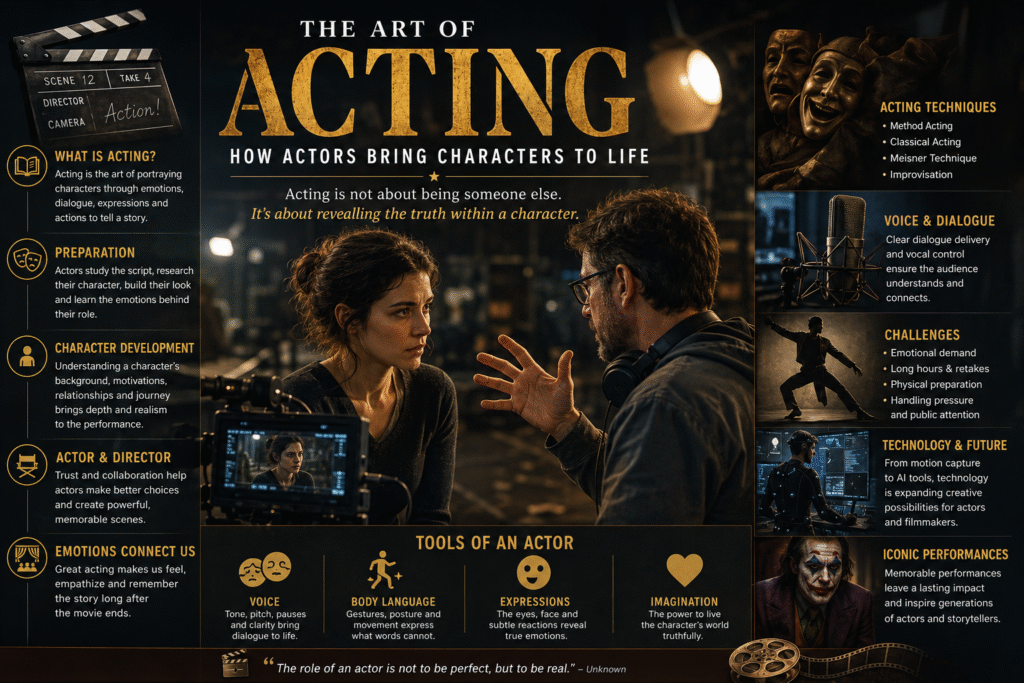
Even small details, such as a change in eye movement or a slight gesture, can create a memorable performance when used effectively.
The Importance of Emotional Expression in Acting
Emotional expression is what allows audiences to connect with movie characters. A powerful performance makes viewers feel the character’s happiness, pain, fear, excitement, or struggles.
Actors must understand how to express emotions naturally without making performances feel exaggerated. They use personal understanding, imagination, and acting techniques to create believable emotional moments.
Memorable movie scenes often become iconic because actors successfully communicate deep emotions that audiences can relate to. Emotional authenticity is one of the biggest differences between an ordinary performance and an unforgettable one.
Challenges Faced by Movie Actors
Movie acting comes with many challenges beyond simply performing scenes. Actors often work long hours, repeat scenes multiple times, and adapt to different filming conditions. Maintaining emotional consistency across multiple takes can be difficult, especially during intense scenes.
Actors may also face challenges such as learning new skills, performing dangerous stunts, managing public expectations, and adapting to different directing styles.
The pressure to deliver convincing performances while working within strict production schedules requires discipline, creativity, and professionalism.
Technology and the Future of Acting
Technology is changing the way actors perform and how audiences experience characters. Motion capture technology allows actors to bring digital characters to life by recording their movements and facial expressions.
Artificial intelligence and virtual production are also creating new possibilities in filmmaking. Actors can now perform in digital environments, interact with virtual characters, and use advanced visual effects to enhance performances.
While technology continues to evolve, human emotion and creativity remain the foundation of great acting. Future cinema will likely combine traditional performance skills with advanced digital tools to create even more immersive experiences.
Famous Performances That Changed Cinema
Throughout film history, certain performances have transformed the way audiences view acting. These performances are remembered because actors created characters with emotional depth, complexity, and authenticity.
Iconic performances across different genres have influenced future generations of actors and filmmakers. From powerful dramatic roles to groundbreaking character portrayals, these performances demonstrate the impact that exceptional acting can have on cinema.
Great performances become part of film history because they create characters that remain memorable long after audiences leave the theatre.Acting in Movies
Conclusion
Acting is one of the most important elements of filmmaking because it gives life to stories and creates emotional connections with audiences. Through preparation, character development, emotional expression, and collaboration, actors transform written characters into unforgettable cinematic experiences.Acting in Movies
As technology continues to change the film industry, the core of acting will remain the same—the ability to understand human emotions and communicate meaningful stories. Whether through traditional performances or future digital innovations, actors will continue to be at the heart of cinema, bringing imagination to life on the big screen.
Internal Links
- How Directors Bring Stories to Life on the Big Screen
- How Screenwriters Turn Ideas into Blockbuster Movies
- The Complete Journey of a Movie: From Script to Screen