
When audiences watch a movie, they often focus on the visuals, performances, and storytelling, but sound plays an equally powerful role in creating a memorable cinematic experience. The sound of footsteps in a suspenseful scene, the impact of an explosion in an action sequence, or the silence before an emotional moment can completely change how viewers experience a story.
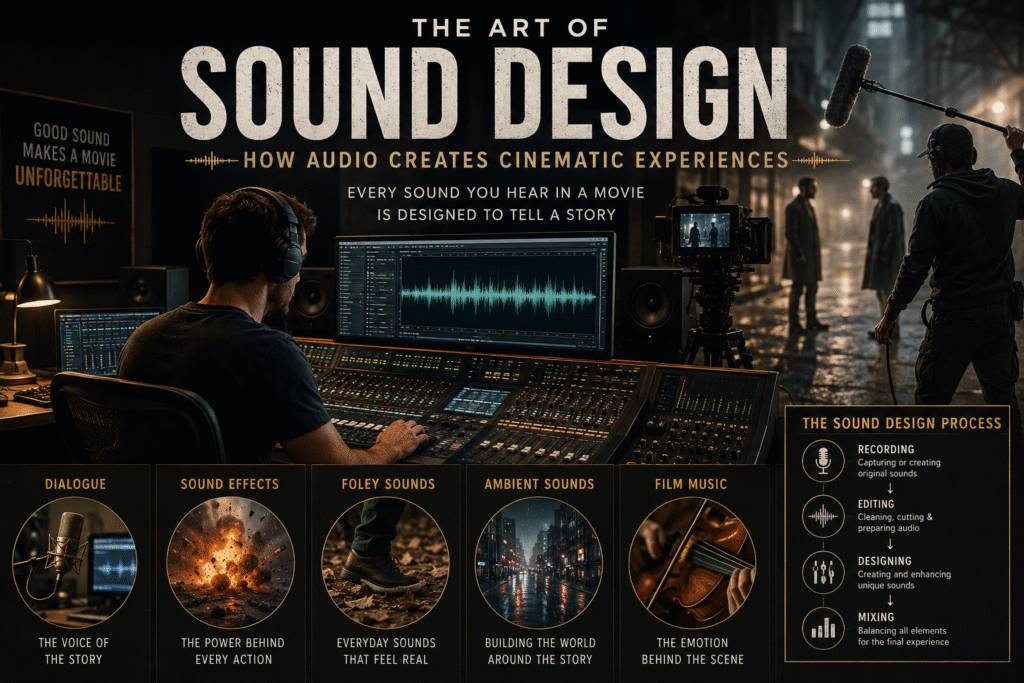
Sound design in filmmaking is the creative process of creating, recording, editing, and mixing audio elements to enhance storytelling. Every sound heard in a movie is carefully designed to support the emotions, atmosphere, and realism of the scene. From dialogue and background sounds to special effects and music, sound helps audiences connect more deeply with the characters and the world of the film.
Modern cinema relies heavily on advanced sound techniques to create immersive experiences. With technologies like surround sound, Dolby Atmos, and artificial intelligence, filmmakers can now create realistic audio environments that make audiences feel like they are part of the story.
What Is Sound Design in Filmmaking?
Sound design in filmmaking is the process of creating and arranging all audio elements used in a movie. It involves recording, editing, modifying, and combining different sounds to build the complete audio experience of a film. Sound designers work with dialogue, sound effects, background sounds, and other audio elements to support the director’s creative vision.
Unlike simply recording sounds during filming, sound design involves creating an emotional and realistic audio world. Many sounds heard in movies are actually recreated after filming through techniques such as Foley recording, digital sound creation, and audio manipulation. These carefully designed sounds help make fictional worlds feel believable and engaging.
Why Sound Is Important in Cinema
Sound is one of the most powerful storytelling tools in filmmaking because it influences emotions, creates atmosphere, and guides audience attention. A dramatic musical score, a sudden sound effect, or complete silence can create tension and make a scene more impactful.
Good sound design helps audiences understand the environment and emotions of characters. For example, the sound of rain can create sadness, distant footsteps can create suspense, and powerful sound effects can make action scenes feel more intense. Without effective sound, even visually impressive movies can feel incomplete and less immersive.
Sound also improves realism by making fictional scenes feel authentic. Whether it is the sound of a busy city, a quiet forest, or a futuristic spaceship, carefully created audio helps transport audiences into the world of the movie.
The Different Elements of Film Sound
Film sound consists of several important elements that work together to create a complete cinematic experience.
Dialogue
Dialogue is the spoken communication between characters. Clear and natural dialogue helps audiences understand the story, emotions, and relationships between characters.
Sound Effects
Sound effects include created sounds that enhance actions and environments. Examples include explosions, vehicle sounds, footsteps, weather effects, and imaginary sounds from fantasy worlds.
Foley Sounds
Foley artists recreate everyday sounds such as walking, opening doors, handling objects, and character movements to make scenes feel realistic.
Ambient Sounds
Ambient sounds create the background atmosphere of a scene. These include sounds of crowds, nature, traffic, wind, and environmental details.
Film Music
Music supports emotional storytelling by creating mood, increasing tension, and highlighting important moments.
Together, these elements create a complete soundscape that enhances the audience’s connection with the film.
The Role of Sound Designers in Movie Production
Sound designers are responsible for creating the overall audio identity of a movie. They collaborate with directors, editors, composers, and production teams to understand the emotional goals of each scene and design sounds that support the storytelling.
Their responsibilities include recording original sounds, creating digital effects, editing dialogue, mixing audio layers, and ensuring that every sound works together smoothly. They often begin working during early production stages and continue throughout post-production to achieve the final audio experience.
A skilled sound designer can transform ordinary scenes into powerful cinematic moments by using sound creatively. Their work is essential in building atmosphere, enhancing realism, and creating memorable movie experiences.
Sound Effects: Creating Realistic Movie Worlds
Sound effects are a major part of creating believable cinematic worlds. Many sounds in movies are not captured during filming and must be recreated or enhanced during post-production. Sound designers use recordings, digital tools, and creative techniques to produce realistic audio effects.
For example, the sound of a spaceship, a monster, or a fantasy environment may not exist in reality, but sound designers combine different audio elements to create something convincing. Even simple actions like walking, opening a door, or handling objects require detailed sound work to make scenes feel authentic.
In action, horror, and science fiction films, sound effects are especially important because they increase excitement, fear, and immersion. They help audiences feel the impact of events happening on screen.
Dialogue Editing and Voice Enhancement
Clear dialogue is essential for effective storytelling. During filming, background noise, location conditions, and technical issues can affect audio quality. Dialogue editors clean, improve, and synchronize recorded voices to ensure audiences can clearly understand conversations.
Voice enhancement techniques are used to remove unwanted noise, improve clarity, and maintain consistent audio levels. In some cases, actors record additional dialogue in a studio through a process called Automated Dialogue Replacement (ADR).
Modern audio technology allows filmmakers to improve performances while preserving the natural emotions of actors. High-quality dialogue editing ensures that the story remains clear and engaging.
The Difference Between Sound Design and Film Music
Although sound design and film music both contribute to a movie’s audio experience, they serve different purposes.
Sound design focuses on creating realistic environments, effects, and audio details that support the world of the story. It includes dialogue, background sounds, Foley effects, and atmospheric audio.
Film music, created by composers, focuses on emotional storytelling through melodies, themes, and musical arrangements. A soundtrack can make audiences feel excitement, sadness, fear, or happiness.
Both elements work together to create a complete cinematic experience. While music influences emotions directly, sound design creates realism and immersion.
How Technology Changed Modern Sound Design
Technology has completely transformed the way sound is created and used in filmmaking. Digital audio workstations, advanced recording equipment, and powerful editing software allow sound designers to create complex audio experiences with incredible precision.
Modern technologies such as surround sound and Dolby Atmos provide immersive audio environments where sounds can move around the audience, creating a more realistic experience. Virtual reality and interactive media have also introduced new possibilities for dynamic sound design.
Artificial intelligence is now assisting sound professionals by improving noise removal, audio enhancement, and automated editing processes. These innovations allow filmmakers to create higher-quality sound faster and more efficiently.
Challenges Faced by Sound Designers
Creating professional-quality sound for movies comes with many challenges. Sound designers must balance creativity with technical limitations while ensuring that every audio element supports the story.
One major challenge is creating realistic sounds for fictional environments. Designing audio for imaginary creatures, futuristic technology, or fantasy worlds requires extensive creativity and experimentation.
Another challenge is maintaining consistency between dialogue, sound effects, and music. Poorly balanced audio can distract audiences and reduce the emotional impact of a scene. Sound designers must carefully mix thousands of audio layers to create a seamless final product.Sound Design in Filmmaking:
The Future of Sound Design with AI and Immersive Audio
The future of sound design is being shaped by artificial intelligence, immersive audio technologies, and advanced production tools. AI-powered systems can assist with audio cleanup, sound generation, and intelligent mixing, helping professionals work more efficiently.
Immersive audio formats such as spatial sound and Dolby Atmos will continue to grow, allowing audiences to experience movies with greater realism and depth. Future filmmaking may include interactive sound experiences where audio changes based on viewer actions or environments.
Although technology will continue to evolve, creativity and human storytelling will remain the foundation of great sound design. The combination of artistic skill and innovative tools will create even more powerful cinematic experiences in the future.
Conclusion
Sound design is one of the most important elements of modern filmmaking, transforming simple visuals into complete emotional experiences. Through dialogue, sound effects, ambient audio, and creative techniques, sound designers help build realistic worlds and strengthen storytelling.
From classic cinema to modern digital productions, sound continues to shape how audiences experience movies. As technology advances with AI and immersive audio, the future of sound design will bring even more exciting possibilities, making films more engaging, realistic, and unforgettable.
Internal Links
- The Power of Movie Soundtracks: How Music Brings Stories to Life
- The Art of Film Editing: The Invisible Storyteller
- The Magic of Cinematography: How Camera Angles and Lighting Shape Every Movie
- The Evolution of Visual Effects (VFX): How Technology Transformed Modern Cinema
- The Complete Journey of a Movie: From Script to Screen
- How Directors Bring Stories to Life on the Big Screen