
Film editing is often called the invisible art of filmmaking because, when done well, audiences rarely notice it. Yet it is one of the most important stages of movie production. Editors take hours of raw footage and transform it into a compelling story by selecting the best shots, arranging scenes, refining pacing, and creating emotional impact. Every smooth transition, dramatic pause, and perfectly timed reaction contributes to how viewers experience a film.
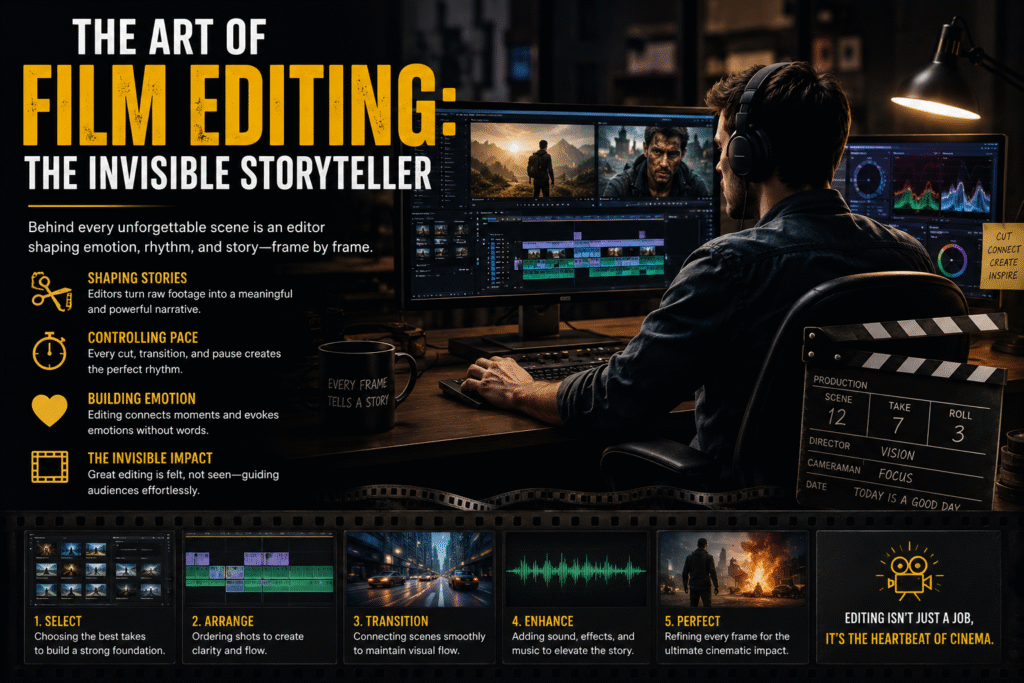
From blockbuster action movies to emotional dramas and thought-provoking documentaries, film editing shapes the rhythm and flow of every story. A talented editor can build suspense, strengthen character development, and guide audiences through complex narratives without drawing attention to the editing itself. Working closely with directors, cinematographers, and sound designers, editors ensure that every frame serves the story and keeps viewers engaged.
The digital era has revolutionized film editing with advanced software, visual effects, cloud collaboration, and AI-assisted editing tools. Modern editors can experiment with multiple versions of a scene, seamlessly integrate special effects, and collaborate with production teams across the world. Despite these technological advancements, the core purpose of film editing remains unchanged: to tell stories in the most engaging and emotionally powerful way possible.
As audiences continue to expect higher-quality cinematic experiences, film editing remains one of the defining elements of successful filmmaking. Behind every memorable movie is an editor whose creative decisions quietly shape every emotion, every scene, and every unforgettable moment.
What Is Film Editing?
Film editing is the process of selecting, arranging, and refining video clips to create a complete and engaging story. Editors decide how scenes flow together, when transitions occur, and how the pacing influences audience emotions.
Why Film Editing Is Called the Invisible Storyteller
Great editing often goes unnoticed because it feels natural. Instead of distracting viewers, it guides them through the story, allowing emotions, suspense, and character development to unfold seamlessly.
How Film Editing Shapes Storytelling
Editing influences every aspect of storytelling by:
- Controlling pacing
- Building emotional impact
- Creating suspense
- Improving narrative clarity
- Strengthening character development
Even small editing choices can dramatically change how audiences interpret a scene.
The Importance of Pacing in Film Editing
Pacing determines the rhythm of a movie. Fast-paced editing creates excitement during action scenes, while slower edits allow emotional moments to resonate with viewers.
Finding the right balance keeps audiences engaged from beginning to end.
Collaboration Between Editors and Directors
Editors work closely with directors to ensure the final film matches the creative vision. Together they review footage, refine scenes, adjust timing, and make storytelling decisions that improve the overall cinematic experience.
Technology Has Changed Film Editing
Modern editing software has transformed post-production by introducing powerful digital tools.
Today’s editors use:
- Non-linear editing software
- Cloud collaboration
- Visual effects integration
- AI-assisted editing tools
- High-resolution digital workflows
These technologies improve efficiency while expanding creative possibilities.
Challenges Film Editors Face
Editors often work under tight deadlines while balancing creative storytelling with technical precision.
Common challenges include:
- Managing large amounts of footage
- Maintaining continuity
- Matching visual styles
- Balancing pacing
- Coordinating with multiple production departments
Why Great Film Editing Matters
Excellent editing can elevate an average film into an unforgettable cinematic experience. It ensures every scene serves a purpose while keeping audiences emotionally invested throughout the story.
Without skilled editing, even outstanding performances and beautiful cinematography may fail to create a compelling film.
The Future of Film Editing
Artificial intelligence, cloud-based collaboration, virtual production, and advanced editing software continue transforming post-production workflows. However, human creativity remains essential for making storytelling decisions that technology cannot replicate.
As filmmaking evolves, editors will continue shaping stories that entertain, inspire, and connect audiences worldwide.
Conclusion
Film editing is one of the most influential yet often overlooked aspects of filmmaking. By carefully arranging scenes, controlling pacing, and enhancing emotional impact, editors become invisible storytellers who shape every cinematic experience. Their work transforms raw footage into compelling narratives that captivate audiences and bring directors’ creative visions to life.
Although technology continues to revolutionize post-production, the art of film editing will always depend on creativity, storytelling, and an understanding of human emotion. Behind every unforgettable movie is an editor whose invisible work leaves a lasting impression long after the credits roll.
Internal Links
- How Screenwriters Turn Ideas into Blockbuster Movies
- The Power of Documentary Filmmaking in the Digital Era
- The Rise of Independent Cinema in the Digital Age
- The Impact of Social Media on Movie Marketing