
Introduction
Independent cinema has always been the heartbeat of creative filmmaking. While major studios often dominate the global box office with blockbuster productions, independent films have consistently delivered original stories, bold ideas, and unforgettable characters. Today, the digital revolution has transformed the landscape of filmmaking, making it easier than ever for aspiring directors, writers, and producers to bring their visions to life.
Affordable digital cameras, powerful editing software, online crowdfunding platforms, and streaming services have opened doors that were once closed to independent filmmakers. A compelling story no longer requires a massive production budget to reach audiences worldwide. Instead, creativity, authenticity, and innovative storytelling have become the defining strengths of modern independent cinema.Independent cinema has entered a remarkable new era. The digital age has transformed filmmaking by making professional tools more accessible, expanding global distribution through streaming platforms, and giving creative storytellers unprecedented opportunities to reach audiences worldwide.Independent Cinema in the Digital Age
As technology continues to evolve, independent films are gaining greater recognition at international film festivals, streaming platforms, and award ceremonies. This shift has created exciting opportunities for new voices while giving audiences access to diverse stories from different cultures and perspectives.
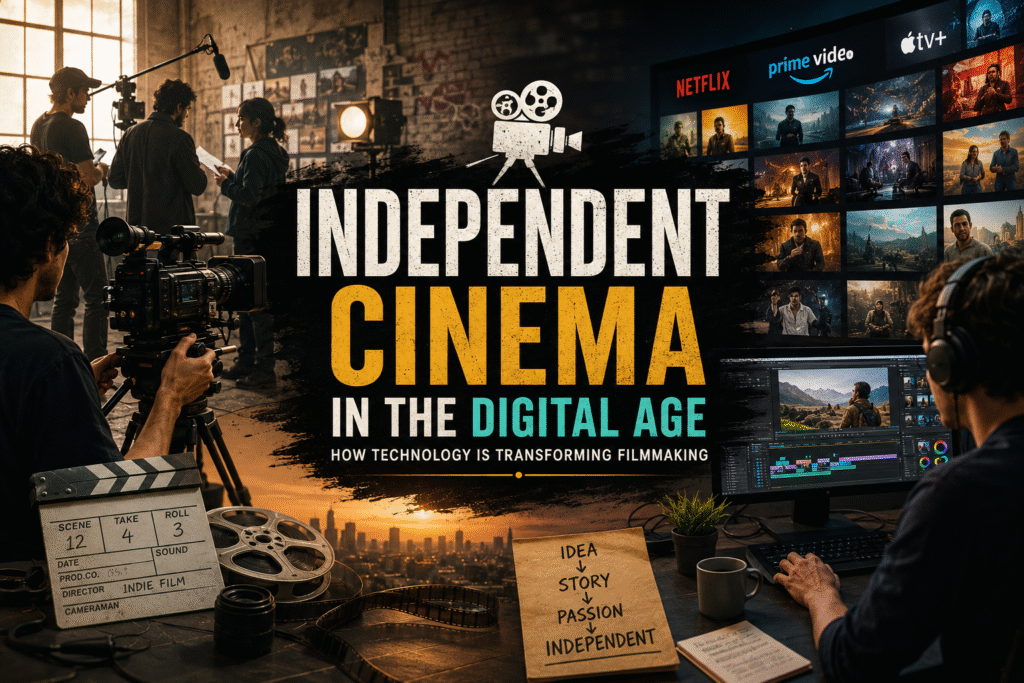
What Is Independent Cinema?
Independent cinema, commonly known as indie cinema, refers to films produced outside the traditional major studio system. Unlike big-budget Hollywood productions, independent films are usually financed by private investors, production companies, crowdfunding campaigns, or government grants.
Independent filmmakers enjoy greater creative freedom because they are not bound by commercial expectations or studio demands. This freedom allows them to explore unconventional themes, social issues, experimental storytelling, and deeply personal narratives that often resonate with audiences on a more emotional level.
Many successful directors began their careers in independent filmmaking before moving on to larger productions. Their early work demonstrated that originality and compelling storytelling often matter more than expensive visual effects or star-studded casts.
How Digital Technology Changed Independent Filmmaking
The digital age has dramatically lowered the barriers to filmmaking. In the past, producing a feature film required expensive cameras, film stock, editing equipment, and distribution networks. Today, many of these resources are affordable and widely accessible.
Modern digital cinema cameras deliver exceptional image quality at a fraction of the cost of traditional film equipment. Editing software allows filmmakers to complete professional post-production work from personal computers, while visual effects tools once reserved for major studios are now available to independent creators.
Cloud storage, online collaboration tools, and remote production workflows have also simplified teamwork across different countries. Filmmakers can now work with editors, composers, and visual artists without sharing the same physical location.
These technological advancements have empowered storytellers from every corner of the world to produce high-quality films with limited budgets.
Streaming Platforms Have Created New Opportunities
Streaming services have completely changed how audiences discover independent films. Previously, indie filmmakers relied heavily on theatrical releases or DVD distribution, making it difficult to reach large audiences.
Today, digital platforms provide independent films with global visibility. Viewers can instantly access movies from different countries, languages, and cultures without visiting a cinema.
Streaming platforms have also increased demand for original content, encouraging investment in fresh voices and unique storytelling. This has created valuable opportunities for independent filmmakers to secure distribution deals and gain international recognition.
For audiences, streaming has introduced a wider variety of films beyond mainstream blockbusters, allowing them to explore documentaries, foreign-language cinema, experimental films, and socially relevant stories.
Film Festivals Continue to Shape Independent Cinema
Film festivals remain one of the most important stepping stones for independent filmmakers. Events such as Sundance, Cannes, Toronto International Film Festival (TIFF), Tribeca, and SXSW have launched the careers of countless directors, writers, and actors.
Winning awards or receiving critical acclaim at these festivals often attracts distributors, investors, and streaming platforms looking for exceptional content.
Film festivals also provide valuable networking opportunities where filmmakers connect with producers, distributors, journalists, and fellow creators. These relationships frequently lead to future collaborations and larger production opportunities.
Beyond awards, festivals celebrate artistic innovation and encourage filmmakers to experiment with storytelling techniques that may not fit traditional commercial formulas.
Crowdfunding Has Empowered Creative Freedom
One of the biggest advantages of the digital age is the rise of crowdfunding. Platforms such as Kickstarter and Indiegogo allow filmmakers to raise production funds directly from audiences who believe in their projects.
Crowdfunding offers more than financial support. It helps filmmakers build loyal communities before production even begins. Supporters often become the film’s earliest promoters, sharing updates and generating excitement through social media.
This direct relationship between creators and audiences has reduced dependence on traditional investors while allowing filmmakers to maintain greater creative control over their projects.
Independent Films Tell Stories That Matter
Independent cinema has earned its reputation for tackling meaningful subjects that larger studios sometimes avoid. Many indie films explore themes such as mental health, identity, social justice, environmental issues, family relationships, and cultural traditions.
These stories often reflect authentic human experiences rather than focusing solely on commercial entertainment. Because independent filmmakers have greater artistic freedom, they can experiment with unique narratives, non-linear storytelling, and unconventional endings.
Audiences increasingly appreciate these emotionally rich stories because they offer fresh perspectives and genuine emotional connections.
Social Media Helps Independent Films Reach Global Audiences
Social media has become one of the most powerful marketing tools for independent filmmakers. Platforms like Instagram, YouTube, Facebook, TikTok, and X enable creators to promote trailers, behind-the-scenes footage, interviews, and production updates at little or no cost.
Word-of-mouth recommendations now spread faster than ever through online communities. A compelling trailer or positive review can quickly generate international attention.
Independent filmmakers also interact directly with audiences, creating stronger engagement than traditional studio marketing campaigns. This personal connection helps build loyal fan communities that continue supporting future projects.
Challenges Independent Filmmakers Still Face
Despite remarkable technological progress, independent filmmaking continues to present several challenges.
Securing production funding remains difficult for many creators. Marketing budgets are often limited, making it harder to compete with heavily promoted studio releases.
Distribution can also be challenging, as thousands of independent films compete for attention every year. Success often depends on positive reviews, festival recognition, and effective digital marketing strategies.
Additionally, independent filmmakers frequently perform multiple roles during production, including directing, producing, editing, and marketing, requiring both creative and business skills.
Why Audiences Love Independent Cinema
Independent films offer something different from mainstream entertainment. Rather than relying on spectacular visual effects or franchise storytelling, they focus on authenticity, emotional depth, and originality.
Viewers appreciate discovering unique stories that challenge conventional ideas and introduce them to different cultures, perspectives, and filmmaking styles.
Many award-winning films began as modest independent productions before earning global recognition, proving that exceptional storytelling can succeed regardless of budget.
As audiences continue seeking meaningful cinematic experiences, independent cinema remains an essential part of the global film industry.
The Future of Independent Cinema
The future of independent cinema looks brighter than ever. Advances in artificial intelligence, virtual production, cloud-based editing, and affordable filmmaking technology continue reducing production costs while improving creative possibilities.
Streaming platforms are investing in original content from emerging filmmakers, and global audiences are becoming increasingly open to international cinema and diverse storytelling.
Independent creators are no longer limited by geography or traditional studio systems. With determination, creativity, and digital tools, filmmakers can share their stories with audiences around the world.
As technology continues to evolve, independent cinema will remain a driving force for innovation, artistic expression, and cultural diversity in the film industry.
Conclusion
Independent cinema has entered a remarkable new era. The digital age has transformed filmmaking by making professional tools more accessible, expanding global distribution through streaming platforms, and giving creative storytellers unprecedented opportunities to reach audiences worldwide.Independent Cinema in the Digital Age
Although challenges such as funding and competition remain, independent filmmakers continue proving that passion, originality, and authentic storytelling can leave a lasting impact. As viewers increasingly embrace fresh perspectives and meaningful narratives, independent cinema will continue shaping the future of filmmaking.
Whether you are a film enthusiast, an aspiring filmmaker, or someone who simply appreciates great storytelling, the rise of independent cinema is a reminder that remarkable films are defined not by their budgets, but by the stories they tell and the emotions they inspire.
Internal Links
- How Cinema Enhances Education: The Power of Learning Through Films
- https://enigmacelluloid.com/cinema-and-education-learning-beyond-the-classroom/The Art of Storytelling in Cinema
- https://enigmacelluloid.com/the-art-of-storytelling-in-cinema/Editing as Invisible Art: The Rhythm That Shapes Story
- https://enigmacelluloid.com/%f0%9f%8e%ac-the-art-of-invisible-editing-why-the-best-edits-go-unnoticed/Sound & Music in Film: The Art of Sound Design in Cinema
- https://enigmacelluloid.com/%f0%9f%8e%ac-how-sound-design-makes-videos-feel-more-professional/Why Great Storytelling Matters More Than Viral Trends
- https://enigmacelluloid.com/%f0%9f%8e%ac-why-great-storytelling-matters-more-than-viral-trends/
Outbound Links
- IMDb — https://www.imdb.com/
- British Film Institute (BFI) — https://www.bfi.org.uk/
- Sundance Institute — https://www.sundance.org/
- Academy Awards (Oscars) — https://www.oscars.org/
- Cannes Film Festival — https://www.festival-cannes.com/