
Cinema has evolved dramatically over the past century, and technology continues to reshape the way movies are created, distributed, and experienced. From traditional film cameras to digital filmmaking, from single-screen theaters to streaming platforms, every technological advancement has transformed the relationship between audiences and cinema. The future of cinema is not about replacing creativity but enhancing the storytelling experience through innovation.
Modern filmmakers use advanced technologies such as virtual production, artificial intelligence, motion capture, high-resolution cameras, and immersive sound systems to create realistic worlds and unforgettable experiences. These tools allow filmmakers to imagine stories that were once impossible to bring to life while reducing production time and improving creative flexibility.
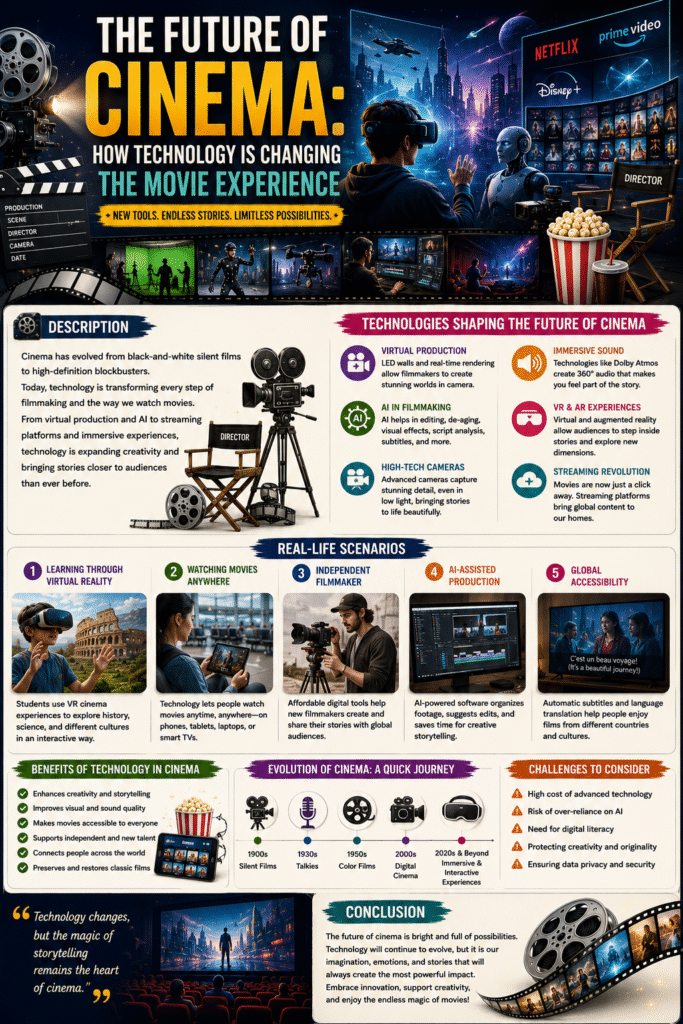
For audiences, technology has made movies more accessible than ever before. People can watch films in theaters, on televisions, tablets, laptops, or smartphones. Streaming platforms allow viewers to enjoy content from different countries, explore new genres, and watch films whenever it is convenient. This has expanded opportunities for independent filmmakers to reach global audiences.
Emerging technologies such as virtual reality (VR) and augmented reality (AR) are beginning to change how stories are experienced. Instead of simply watching a movie, audiences may one day interact with cinematic worlds, explore environments, and experience stories from different perspectives. While these technologies are still developing, they represent exciting possibilities for the future of entertainment.
Artificial intelligence is also becoming a valuable tool in filmmaking. AI assists with editing, visual effects, animation, subtitles, language translation, and production planning. However, human creativity remains at the center of cinema. Technology provides powerful tools, but it is imagination, emotion, and storytelling that continue to make movies meaningful.