
Introduction
A successful film does not begin when the director says, “Action.” Long before the cameras are switched on, filmmakers spend considerable time developing the script, planning the budget, selecting locations, assembling the crew, casting actors and preparing every department for the shoot. This stage is known as film pre-production.
Pre-production is where a film moves from an idea on paper to a practical production plan. Careful preparation at this stage can save time, control costs and help the entire production team work toward the same creative vision.
What Is Film Pre-Production?
Film pre-production is the planning stage that takes place before principal photography begins. It covers the creative, financial, technical and logistical decisions required to prepare a film for shooting.
The process can include script breakdowns, budgeting, scheduling, casting, location scouting, production design, storyboarding, equipment planning, rehearsals and preparation of production documents.
Every film has different requirements, so the length and complexity of pre-production can vary considerably. A small independent production may have a compact planning process, while a large feature film can spend months preparing before the first day of shooting.
Why Is Pre-Production Important in Filmmaking?
Good preparation gives filmmakers a clear plan before production begins. It allows different departments to understand their responsibilities and identify potential problems before they become expensive issues on set.
Effective pre-production helps with:
- Controlling the production budget
- Creating a realistic shooting schedule
- Coordinating cast and crew
- Preparing locations and sets
- Planning camera and lighting requirements
- Identifying production challenges
- Reducing unnecessary delays
- Maintaining the director’s creative vision
The more complicated a production becomes, the more important detailed planning becomes.
The Film Pre-Production Process
Script Development and Script Lock
The screenplay provides the foundation for the entire production. Before detailed planning begins, the script is reviewed and refined so that the production team understands exactly what needs to be filmed.
Once the screenplay is sufficiently developed and approved for production, it can be used for detailed planning.
Script Breakdown
A script breakdown examines the screenplay scene by scene.
The production team identifies important elements such as:
- Characters
- Locations
- Props
- Vehicles
- Costumes
- Special effects
- Makeup requirements
- Background actors
- Special equipment
This information helps production managers understand what each scene will require.
Film Budgeting
The production budget determines how the available money will be allocated across the project.
Costs may include:
- Cast
- Crew
- Equipment
- Locations
- Travel
- Accommodation
- Production design
- Costumes
- Makeup
- Food and catering
- Insurance
- Post-production
A realistic budget helps the production team make practical decisions before filming begins.
Creating the Shooting Schedule
Once the script has been broken down and the budget has been considered, the production team develops a shooting schedule.
The schedule determines when and where scenes will be filmed. It also considers actor availability, location availability, equipment requirements, travel time and other production limitations.
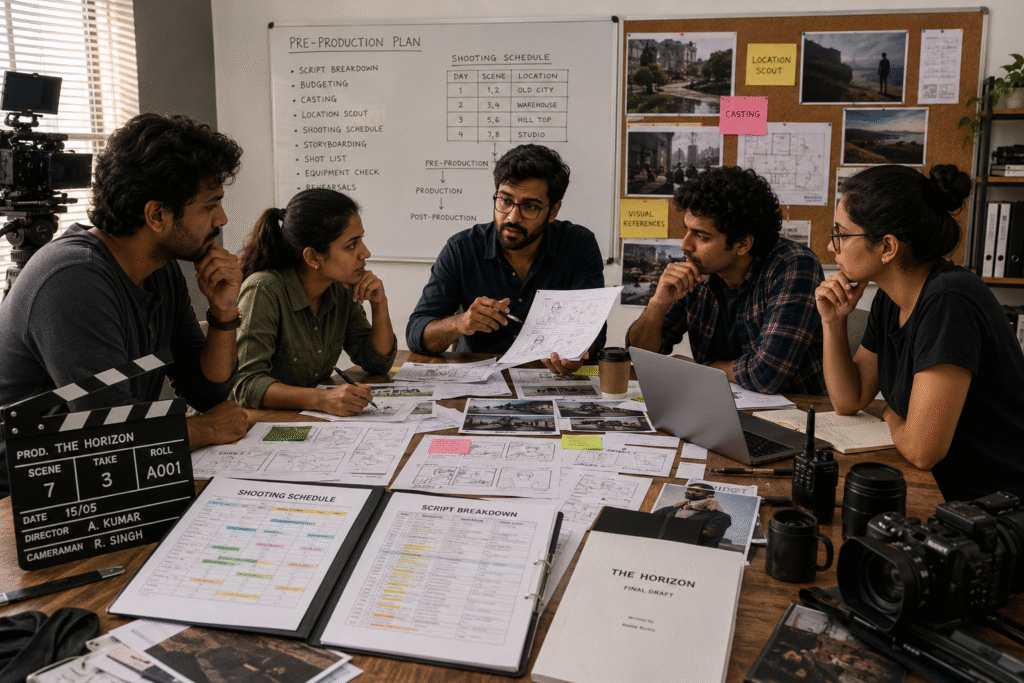
A well-planned schedule can prevent unnecessary movement and reduce wasted production time.
Casting Actors
Casting is another important part of pre-production.
The casting team and director look for performers who fit the characters and understand the requirements of the story. Depending on the production, auditions, screen tests and callbacks may be organised before the final cast is selected.
Hiring the Film Crew
A film requires many people working across different departments.
Depending on the scale of the production, the team may include:
- Director
- Producers
- Assistant directors
- Cinematographer
- Camera operators
- Production designers
- Art department
- Costume department
- Makeup and hair teams
- Sound department
- Lighting crew
- Editors
- VFX artists
Each department needs to understand its responsibilities before filming begins.
Location Scouting and Recce
Locations can have a major influence on the appearance and practical requirements of a film.
During location scouting, the production team considers factors such as:
- Visual suitability
- Accessibility
- Lighting conditions
- Available space
- Power supply
- Sound and background noise
- Parking
- Crew movement
- Permissions and restrictions
A location recce allows the team to examine the site before the shoot and identify potential problems.
Production Design
Production design establishes the physical appearance of the film.
This can include sets, props, furniture, colours, decorations and other visual elements that help create the world of the story.
Production designers work closely with the director and cinematographer so that the visual environment supports the overall style of the film.
Storyboarding and Shot Lists
Storyboards provide a visual representation of how important scenes may be filmed.
A shot list, meanwhile, provides a practical breakdown of the shots required for a scene.
These tools help the director and cinematographer discuss:
- Camera positions
- Framing
- Movement
- Lens choices
- Coverage
- Composition
They also help the crew understand what needs to be captured during the shoot.
Camera, Lighting and Equipment Planning
Technical preparation is another major part of pre-production.
The cinematographer and camera department decide what cameras, lenses, lighting equipment, rigs and other tools will be required.
Testing equipment before production can also help identify technical problems before they affect the shooting schedule.
Costume, Hair and Makeup Planning
Costume, hair and makeup contribute to a character’s appearance and can also help establish the time period, location and atmosphere of a story.
These departments may prepare references, conduct fittings and carry out makeup or camera tests before filming.
Rehearsals and Camera Tests
Rehearsals allow actors and directors to work through scenes before the actual shoot.
Camera tests can also be used to evaluate lighting, costumes, makeup, lenses and the overall visual approach.
These tests can reveal problems that may not be obvious during planning alone.
Production Documents
A professional production depends on accurate documentation.
Common pre-production documents include:
- Script breakdown
- Budget
- Shooting schedule
- Shot list
- Storyboard
- Call sheets
- Crew list
- Equipment list
- Location information
- Production reports
Keeping these documents organised helps different departments stay informed throughout the production.
Final Production Meeting
Before the cameras roll, the main departments come together to review the production plan.
The team may discuss the shooting schedule, locations, cast, equipment, safety requirements, scene requirements and any last-minute changes.
This final coordination helps everyone begin the shoot with a clear understanding of the plan.
Common Film Pre-Production Mistakes
Even well-planned productions can face problems, but many issues can be reduced through careful preparation.
Common mistakes include:
- Beginning production without a sufficiently developed script
- Underestimating the budget
- Creating an unrealistic shooting schedule
- Failing to check locations properly
- Ignoring sound requirements
- Not testing equipment
- Poor communication between departments
- Leaving important decisions until the shooting day
Pre-production cannot eliminate every production problem, but it can reduce avoidable ones.
Film Pre-Production for Independent Filmmakers
Independent filmmakers often work with smaller budgets and limited resources, making careful planning especially important.
A detailed script breakdown, realistic schedule and clear list of priorities can help smaller productions use their available resources effectively.
The goal is not necessarily to have the biggest production. It is to make the best possible use of the resources available.
How Technology Is Changing Film Pre-Production
Technology has changed the way production teams prepare films.
Digital tools can assist with scheduling, script breakdowns, storyboards, shot planning, budgeting and communication between departments.
Remote collaboration has also made it easier for filmmakers working in different locations to review documents and planning materials before production begins.
However, technology remains a tool. Creative decisions, practical experience and communication between people continue to be at the centre of effective pre-production.
Final Pre-Production Checklist
Before filming begins, the production team should confirm:
- The script is ready
- The budget has been approved
- The shooting schedule is practical
- The cast is confirmed
- The crew is organised
- Locations are confirmed
- Required permissions are obtained
- Equipment is prepared
- Costumes and makeup are planned
- Storyboards and shot lists are available
- Production documents are complete
- Safety requirements have been reviewed
- Departments understand the shooting plan
Final Thoughts
Film pre-production is the foundation on which the rest of a production is built.
The decisions made before the first day of shooting influence the budget, schedule, creative direction and overall efficiency of the production. When the script, cast, crew, locations, equipment and departments are properly prepared, the actual shoot can move forward with greater confidence.
Filmmaking may look like it begins when the camera starts recording, but much of the work that makes a production successful happens beforehand.
Good filmmaking starts long before the cameras roll.