
Introduction
Every successful movie begins with a creative idea, but transforming that idea into a finished film requires significant financial support. From hiring actors and production teams to building sets, creating visual effects, marketing, and distributing the final product, every stage of filmmaking requires careful financial planning.
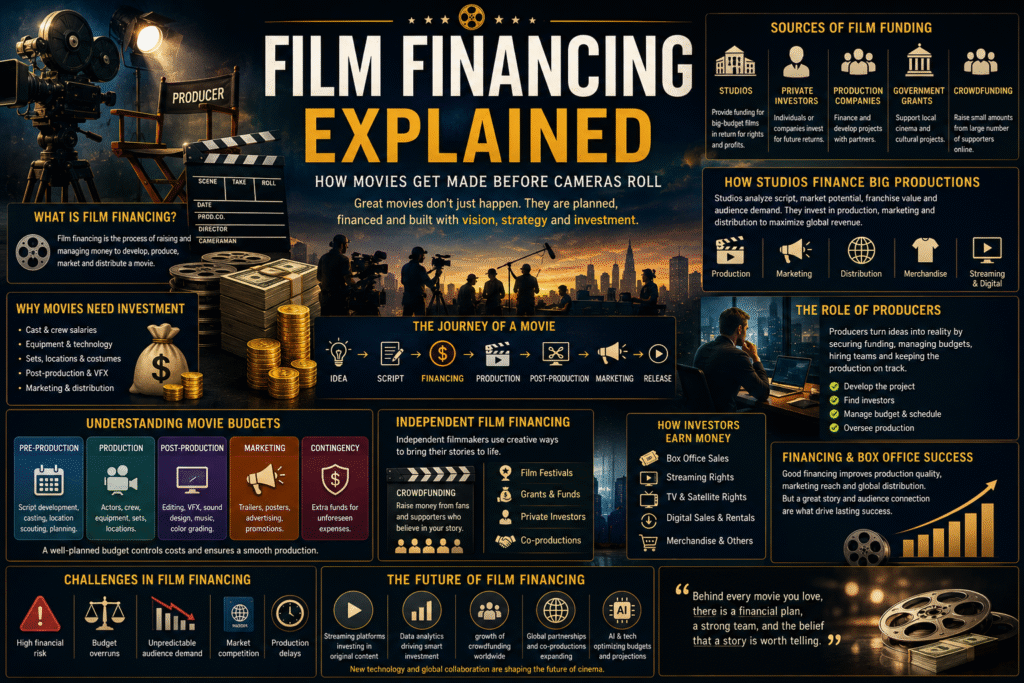
Film financing is the process of securing and managing the money needed to develop, produce, and release a movie. Behind every blockbuster and independent film is a complex financial structure involving producers, studios, investors, production companies, and distribution partners.
Understanding how movies are financed reveals the business side of cinema and shows how creative visions become reality. In this article, we explore how filmmakers raise funds, manage budgets, attract investors, and overcome financial challenges before cameras start rolling.Film Financing
What Is Film Financing?
Film financing refers to the process of obtaining financial resources required to create a movie. It covers every stage of production, including script development, pre-production, filming, post-production, marketing, and distribution.
Before production begins, filmmakers need to estimate costs and determine where the money will come from. Producers create financial plans that outline the budget, expected expenses, potential revenue, and investment opportunities.
Film financing allows filmmakers to transform creative ideas into actual productions by providing the resources needed for equipment, locations, cast, crew, and technology.
Why Movies Need Financial Investment
Making a movie involves thousands of expenses. Even small independent films require funding for cameras, locations, actors, editing, sound design, and promotional activities.
Large productions often require millions of dollars because they involve:
- Famous actors
- International locations
- Advanced visual effects
- Large production teams
- Extensive marketing campaigns
Financial investment helps filmmakers maintain production quality and bring their creative vision to audiences. Without proper funding, even great ideas may never reach the screen.
The Different Sources of Film Funding
Movies can receive funding from various sources depending on their scale, genre, and production goals.
1. Film Studios
Major studios often finance large-scale productions by providing budgets and resources. In return, they control distribution and receive a share of the profits.
2. Private Investors
Individuals or investment groups may provide money to support film projects. They usually expect financial returns if the movie becomes successful.
3. Production Companies
Production companies develop and finance films by partnering with investors, studios, and distributors.
4. Government Grants and Film Funds
Some countries provide financial support to encourage local filmmaking and cultural projects.
5. Crowdfunding
Independent filmmakers can raise money directly from audiences through online crowdfunding platforms.
Each funding method provides different opportunities and challenges for filmmakers.
How Movie Studios Finance Big Productions
Major movie studios use complex financial strategies to fund blockbuster films. They analyse market trends, audience interest, franchise potential, and expected revenue before approving large budgets.
Studios often invest in:
- Development costs
- Production expenses
- Marketing campaigns
- Global distribution
Big-budget movies may involve partnerships between multiple studios and international companies to reduce financial risk.
Studios also consider additional revenue sources such as merchandise, streaming rights, television licensing, and international markets when deciding whether to finance a project.
The Role of Producers in Film Financing
Producers are responsible for managing the financial side of filmmaking. They develop budgets, find investors, negotiate deals, and ensure that money is used effectively throughout production.
A producer’s responsibilities include:
- Creating financial plans
- Securing funding
- Managing production costs
- Hiring key team members
- Working with studios and distributors
Producers act as the connection between creative ideas and business decisions. Their ability to manage finances often determines whether a movie successfully moves from development to completion.
Understanding Movie Budgets
A movie budget represents the total cost required to create and release a film. Budgets vary greatly depending on the type of movie, production scale, and creative requirements.
Major budget categories include:
Pre-Production Costs
- Script development
- Casting
- Location planning
- Production design
Production Costs
- Actors’ salaries
- Equipment
- Crew payments
- Set construction
Post-Production Costs
- Editing
- Visual effects
- Sound design
- Music
Marketing Costs
- Advertising
- Trailers
- Promotional events
A carefully managed budget helps filmmakers control expenses while achieving their creative goals.
Independent Film Financing and Crowdfunding
Independent filmmakers often face challenges when securing traditional funding. Without the support of major studios, they use alternative methods to finance their projects.
Crowdfunding has become a popular option where filmmakers collect small contributions from large numbers of supporters through online platforms.
Benefits of crowdfunding include:
- Direct audience involvement
- Creative independence
- Reduced dependence on studios
- Community building
Independent films may also receive funding through film festivals, grants, private investors, and partnerships with production companies.
How Investors Earn Money from Movies
Investors provide financial support because they expect returns from successful films. Movie revenue can come from multiple sources, including:
- Box office ticket sales
- Streaming rights
- Television licensing
- Digital rentals
- Merchandise
- International distribution
If a movie performs well commercially, investors may receive profits based on their agreements with producers and studios.
However, film investment involves risk because not every movie becomes profitable. Successful investors carefully evaluate scripts, production teams, market potential, and audience demand before investing.
The Relationship Between Financing and Box Office Success
Film financing and box office performance are closely connected. The amount of money invested in a movie influences production quality, marketing reach, and audience awareness.
A larger budget can provide access to:
- Better technology
- Popular actors
- Bigger marketing campaigns
- Wider distribution
However, a high budget does not guarantee success. Strong storytelling, effective marketing, and audience connection are equally important factors in determining a movie’s performance.
Many low-budget films have achieved major success because of creative storytelling and smart financial decisions.
Challenges in Film Financing
Film financing involves many risks and challenges. Producers must manage unpredictable situations such as production delays, increasing costs, market changes, and changing audience preferences.
Common challenges include:
- Finding reliable investors
- Controlling production expenses
- Managing financial risks
- Predicting audience interest
- Competing with other releases
The entertainment industry is unpredictable, and financial planning plays a crucial role in reducing risks and ensuring successful movie production.
The Future of Film Financing in the Digital Era
Technology is changing the way movies are financed and produced. Digital platforms, streaming services, and online investment models are creating new opportunities for filmmakers.
Future trends include:
- Streaming companies investing directly in films
- Data-driven decisions about movie projects
- Online crowdfunding growth
- Global investment partnerships
- AI-assisted financial planning
As the film industry continues to evolve, filmmakers will have more ways to secure funding and bring unique stories to audiences worldwide.
Conclusion
Film financing is the foundation that allows creative ideas to become cinematic experiences. From independent productions to global blockbusters, every movie depends on careful financial planning, investment, and management.
Producers, studios, and investors play a crucial role in supporting filmmakers and bringing stories to life. While technology continues to change how movies are funded, the connection between creativity and financial strategy will always remain essential in the world of cinema.