
Introduction
A movie’s journey does not end after production is complete. Even the most creative and technically impressive films need a strong distribution strategy to reach audiences. Film distribution acts as the bridge between filmmakers and viewers, ensuring that movies are available through the right channels at the right time.
From cinema halls and television networks to digital platforms and streaming services, distribution has changed dramatically over the years. Modern filmmakers now have more opportunities to share their stories globally, while audiences can access movies from almost anywhere in the world.
What Is Film Distribution?
Film distribution is the process of making a completed movie available to audiences through different platforms and markets. It involves planning how, where, and when a movie will be released to maximize audience reach and commercial success.
Distributors handle important decisions such as release dates, theatre bookings, digital availability, promotional partnerships, and international licensing. Their goal is to connect films with the right audience while generating revenue for filmmakers and production companies.
The Role of Film Distributors
Film distributors are responsible for managing the journey of a movie after production. They work with studios, producers, theatres, streaming services, and marketing teams to create effective release strategies.
Their responsibilities include:
- Planning release schedules
- Negotiating theatre screenings
- Managing digital releases
- Promoting films in different markets
- Handling international rights
- Analysing audience demand
A successful distributor understands market trends and knows how to position a movie for maximum visibility.
How Movies Move from Studios to Audiences
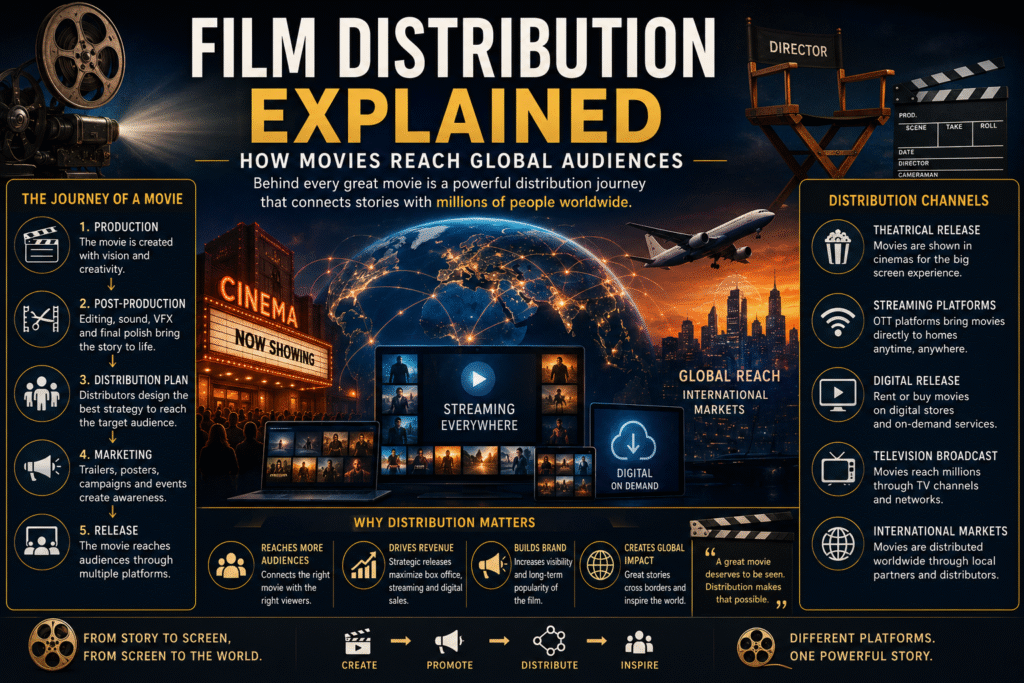
The journey from a completed film to an audience involves multiple stages. After production and post-production, filmmakers partner with distributors who evaluate the movie’s target audience, genre, budget, and commercial potential.
The distributor then decides the best release approach, which may include theatrical releases, streaming platforms, television broadcasts, or digital purchases. Marketing campaigns, trailers, posters, and promotional events are used to create awareness before release.
Each step helps ensure that the movie reaches viewers effectively.
Theatrical Distribution: Releasing Movies in Cinemas
For many films, theatrical release remains one of the most important distribution methods. Movies are shown in cinemas where audiences experience them on large screens with advanced sound systems.
Theatrical distributors negotiate with cinema chains to secure screens and determine release timing. Factors such as competition, holidays, audience interest, and production budget influence these decisions.
Successful theatrical releases can generate significant revenue and create cultural impact, especially for major blockbuster films.
Digital Distribution and Streaming Platforms
The rise of digital platforms has transformed the way movies are distributed. Streaming services allow audiences to watch films instantly from anywhere, making cinema more accessible worldwide.
Digital distribution includes:
- Streaming platforms
- Online rentals
- Digital purchases
- Video-on-demand services
Platforms use recommendation systems, global availability, and personalised content strategies to connect movies with audiences. This has created new opportunities for independent filmmakers and smaller productions.
International Film Distribution
Movies today are no longer limited to their country of origin. International distribution allows films to reach audiences across different languages, cultures, and regions.
Distributors often adapt movies for global markets through:
- Subtitles
- Dubbing
- Regional marketing campaigns
- Cultural adjustments
International success can significantly increase a film’s revenue and reputation. Many movies become global hits because of effective worldwide distribution strategies.
Film Distribution Strategies and Release Planning
A successful release requires careful planning. Distributors analyse audience behaviour, competition, market conditions, and trends before deciding how to launch a movie.
Common strategies include:
- Worldwide simultaneous releases
- Limited theatrical releases
- Festival premieres
- Exclusive streaming launches
- Seasonal releases
The timing and method of release can strongly influence a movie’s success.
How Distribution Impacts Movie Success
Distribution plays a major role in determining whether a movie reaches its full potential. A great film with poor distribution may struggle to find audiences, while effective distribution can help a movie become a worldwide success.
Strong distribution helps increase:
- Audience awareness
- Box office revenue
- Streaming views
- Brand recognition
- Long-term popularity
The right distribution strategy ensures that filmmakers’ work reaches the people who will appreciate it most.
The Difference Between Independent and Studio Distribution
Large studios usually have established distribution networks, marketing budgets, and international partnerships. They can release movies across thousands of theatres and multiple platforms simultaneously.
Independent filmmakers often use alternative distribution methods such as film festivals, online platforms, and specialised distributors. Digital technology has made it easier for independent creators to reach audiences without relying entirely on traditional studios.
Both approaches provide unique opportunities depending on the size, budget, and goals of the film.
The Future of Film Distribution with Technology
Technology continues to reshape how movies reach audiences. Streaming platforms, artificial intelligence, data analytics, and digital marketing are changing traditional distribution models.
Future distribution may become more personalised, with platforms using audience data to recommend films and create targeted release strategies. Virtual reality, interactive cinema, and emerging technologies may introduce new ways for audiences to experience stories.
As the industry evolves, film distribution will continue adapting to changing viewer habits while helping filmmakers connect with global audiences.
Conclusion
Film distribution is one of the most important stages in the filmmaking journey. It transforms completed movies into accessible entertainment experiences for audiences worldwide. From cinema releases to streaming platforms, distribution determines how stories travel across borders and reach millions of viewers.
As technology continues to advance, film distribution will become more innovative and accessible. While the methods of delivering movies may change, the goal will remain the same: connecting great stories with audiences everywhere.