
Every blockbuster movie begins with a simple idea. Before breathtaking action sequences, memorable characters, and stunning visual effects appear on screen, there is a carefully crafted screenplay that serves as the foundation of the entire film. Screenwriters are the creative minds who transform ideas into compelling stories, giving directors, actors, and production teams a blueprint for bringing those stories to life.
Screenwriting is much more than writing dialogue. It involves creating believable characters, building emotional connections, developing engaging plots, and maintaining the right pacing from beginning to end. Whether the story is an action-packed adventure, a heartfelt drama, a romantic comedy, or a science fiction epic, a strong screenplay is essential to a movie’s success.
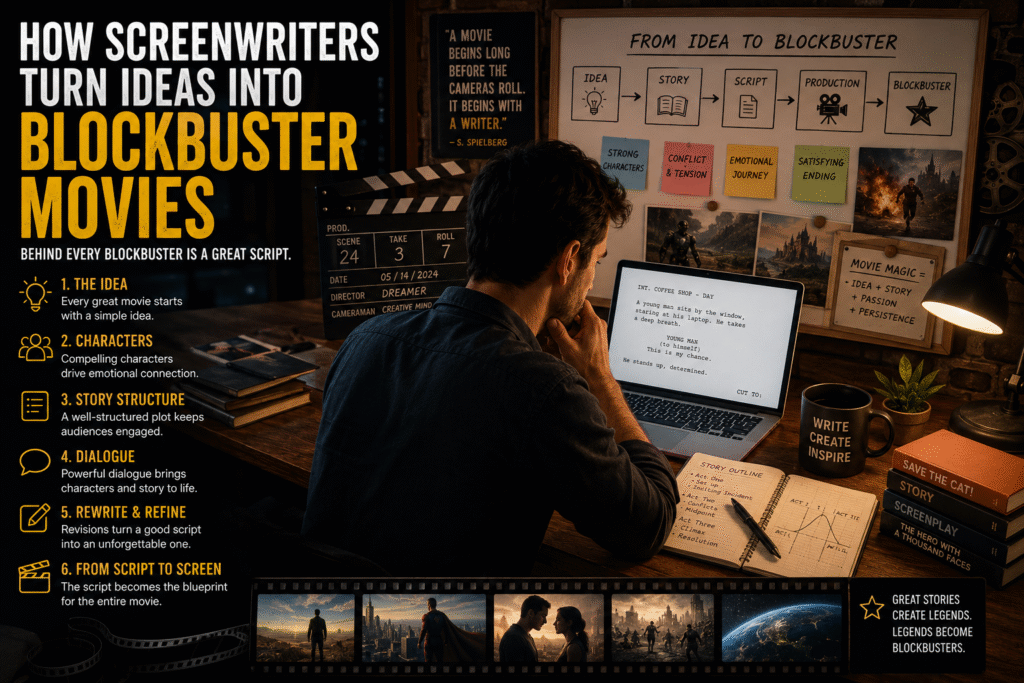
Modern screenwriters use a combination of creativity, research, storytelling techniques, and screenplay structure to keep audiences engaged. They carefully plan every scene, refine character arcs, and write dialogue that feels natural while moving the story forward. Through multiple revisions and collaboration with producers, directors, and editors, an initial concept gradually evolves into a polished script ready for production.
Technology has also transformed the screenwriting process. Professional screenwriting software, digital collaboration tools, and online research resources have made it easier for writers to organize ideas, edit scripts, and work with filmmaking teams across the world. Despite these technological advances, the heart of great screenwriting remains the same—a powerful story that connects with audiences on an emotional level.
As the film industry continues to evolve, screenwriters remain at the center of every successful production. Their ability to turn simple ideas into unforgettable cinematic experiences is what transforms ordinary concepts into blockbuster movies that entertain, inspire, and leave a lasting impression on audiences worldwide.
What Does a Screenwriter Do?
A screenwriter develops the story, characters, dialogue, and screenplay structure that guide every stage of film production. Their script becomes the foundation for directors, actors, cinematographers, and editors.
From Idea to Story
Every successful screenplay starts with a single concept. Screenwriters expand that idea by asking important questions:
- Who is the main character?
- What problem do they face?
- What obstacles stand in their way?
- How does the story end?
Answering these questions creates a strong foundation before writing the first scene.
Building Memorable Characters
Great movies are remembered because of unforgettable characters. Screenwriters give each character unique personalities, goals, strengths, weaknesses, and emotional journeys.
Whether it’s a superhero, detective, or ordinary individual, audiences connect with characters who feel authentic and relatable.
Creating a Strong Story Structure
Most blockbuster movies follow the classic three-act structure:
Act One: The Beginning
The audience meets the characters and learns about the central conflict.
Act Two: The Conflict
Challenges become more difficult, relationships evolve, and tension increases.
Act Three: The Resolution
The story reaches its climax before concluding with a satisfying ending.
This structure helps maintain audience engagement from beginning to end.
Writing Natural Dialogue
Dialogue reveals character personalities, advances the plot, and builds emotional connections.
Effective dialogue is:
- Natural
- Purposeful
- Emotional
- Memorable
Rather than explaining everything, skilled screenwriters allow actions and conversations to reveal important information.
Revising the Screenplay
Few successful screenplays are completed in a single draft. Professional writers revise their scripts multiple times to improve pacing, strengthen dialogue, remove unnecessary scenes, and enhance character development.
Constructive feedback from producers, directors, and fellow writers helps refine the screenplay before production begins.
Technology Has Changed Screenwriting
Today’s screenwriters use digital tools to streamline the writing process.
Modern technology offers:
- Professional screenplay software
- Cloud-based collaboration
- Story planning tools
- AI-assisted research
- Online script libraries
These tools improve productivity while allowing writers to focus on creativity.
Collaboration in Filmmaking
Although screenwriters create the original story, filmmaking is highly collaborative.
Throughout production, writers often work closely with:
- Directors
- Producers
- Editors
- Actors
- Script consultants
This collaboration ensures the screenplay translates effectively from page to screen.
Challenges Screenwriters Face
Screenwriting is both creative and demanding.
Common challenges include:
- Writer’s block
- Meeting deadlines
- Script revisions
- Balancing creativity with commercial expectations
- Adapting stories based on production requirements
Successful writers overcome these obstacles through persistence, research, and continuous improvement.
Why Great Screenwriting Matters
Every successful movie depends on a strong script. Even the most advanced visual effects cannot replace compelling storytelling.
Excellent screenwriting:
- Creates emotional connections
- Builds memorable characters
- Maintains audience interest
- Delivers meaningful messages
- Provides the blueprint for the entire filmmaking process
Without a well-written screenplay, even large-budget productions struggle to leave a lasting impact.
The Future of Screenwriting
Streaming platforms, global audiences, and artificial intelligence are reshaping the film industry. While technology provides new writing tools, original storytelling remains irreplaceable.
Future screenwriters will continue exploring diverse perspectives, innovative storytelling formats, and emotionally engaging narratives that connect with audiences worldwide.
Conclusion
Screenwriters are the architects behind every blockbuster movie. Their creativity transforms simple ideas into unforgettable stories filled with memorable characters, exciting conflicts, and emotional moments. Through careful planning, structured storytelling, multiple revisions, and collaboration with filmmaking teams, screenwriters create the foundation upon which successful films are built.
Although filmmaking technology continues to evolve, the importance of great storytelling remains unchanged. Every iconic movie begins with a writer who imagines a world, creates compelling characters, and crafts a screenplay capable of captivating audiences. As cinema continues to grow, screenwriters will remain at the heart of the filmmaking process, proving that every blockbuster starts with a powerful idea and a well-written script.