
Movies are much more than a source of entertainment. They have the power to influence the way people think, feel, communicate, and make decisions in everyday life. Whether it is a motivational story, a family drama, a documentary, or a comedy, films often leave a lasting impression that extends far beyond the movie theater. Through relatable characters and meaningful stories, cinema inspires people to reflect on their own lives and sometimes even change the way they approach challenges and opportunities.
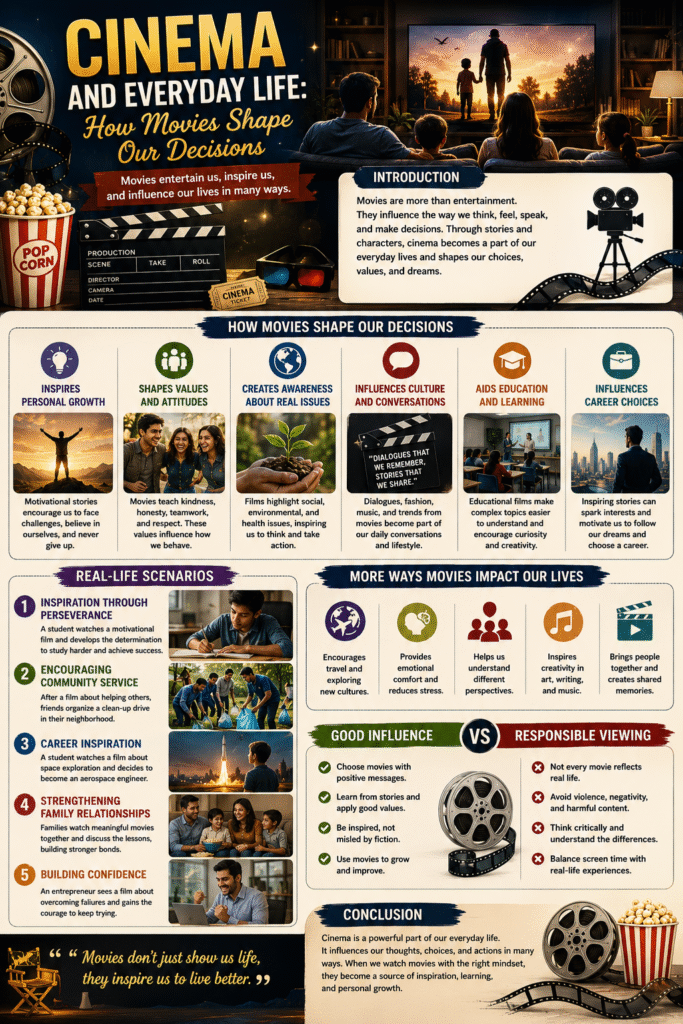
One of the most significant ways movies influence everyday life is by inspiring personal growth. Many films feature ordinary individuals who overcome obstacles through determination, hard work, and resilience. Watching these journeys encourages audiences to believe in themselves and face their own challenges with greater confidence. A student preparing for an important examination, an athlete training for a competition, or an entrepreneur starting a new business may find motivation in stories that emphasize perseverance and dedication.
Movies also shape the values and attitudes of society. Films that highlight kindness, honesty, teamwork, respect, and responsibility often encourage viewers to adopt these qualities in their own lives. Family-oriented stories remind people of the importance of spending time with loved ones, while films about friendship demonstrate the value of trust, loyalty, and mutual support. These messages become meaningful because audiences experience them emotionally rather than simply hearing advice.
Another important influence of cinema is its ability to create awareness about real-world issues. Many films explore topics such as environmental conservation, education, healthcare, equality, mental well-being, and community service. By presenting these subjects through engaging stories, movies encourage audiences to think critically about society and consider how they can contribute positively to their communities. Sometimes a single film can inspire thousands of people to volunteer, support charitable causes, or adopt more sustainable habits.
Cinema also affects everyday conversations and cultural trends. Popular dialogues, memorable scenes, fashion styles, hairstyles, music, and even gestures often become part of daily life. People quote famous lines, imitate styles they admire, and recommend movies that have touched them emotionally. Social media further amplifies this influence by allowing audiences to discuss films, share reviews, and participate in conversations that extend long after a movie’s release.
In education, films have become valuable learning tools. Teachers often use movies and documentaries to explain historical events, scientific discoveries, and social issues in a way that is both engaging and easy to understand. Visual storytelling helps students connect with complex ideas more effectively than traditional methods alone. Educational films also encourage curiosity, critical thinking, and creative problem-solving.
Movies can even influence career choices and personal ambitions. A well-made film about medicine, engineering, journalism, wildlife conservation, architecture, or entrepreneurship may spark an interest that leads someone to explore that profession. Many successful individuals have shared stories about how cinema inspired them to pursue careers they had never previously considered.
Technology has made cinema more accessible than ever before. With streaming platforms, people can watch films from different countries and cultures without leaving their homes. This exposure broadens perspectives and helps audiences appreciate different traditions, lifestyles, and ways of thinking. International cinema encourages cultural understanding and reminds viewers that despite differences in language or geography, many human experiences are universal.
However, movies should also be viewed with critical thinking. While cinema offers inspiration and valuable lessons, not every situation portrayed on screen reflects real life. Some scenes are exaggerated for dramatic effect, and audiences should distinguish between fictional entertainment and practical reality. Responsible viewing allows people to enjoy films while making thoughtful decisions based on real-world values and experiences.