
Every memorable film is shaped not only by its story and characters but also by the way it uses light and shadow. Lighting is one of the most powerful visual tools in filmmaking, helping directors and cinematographers create emotion, guide the audience’s attention, and establish the atmosphere of every scene. Without saying a single word, light can communicate joy, fear, mystery, hope, or sadness.
Filmmakers carefully design lighting to support the story. Bright, natural lighting often creates a feeling of warmth, happiness, and openness, while darker lighting with strong shadows can build suspense, tension, or mystery. The direction, intensity, and color of light all influence how viewers perceive a character or a situation.
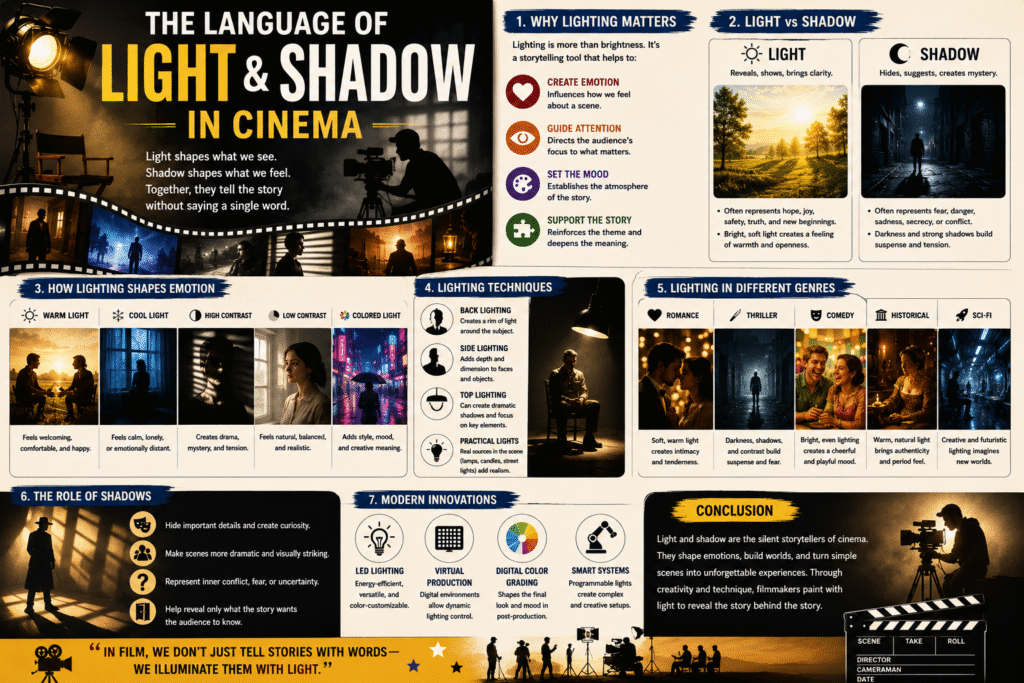
Shadows are equally important in visual storytelling. They can hide important details, create dramatic silhouettes, or symbolize uncertainty and conflict. By controlling what the audience can and cannot see, filmmakers encourage curiosity and emotional engagement. Even a simple scene can become visually powerful through thoughtful lighting and shadow placement.
Different genres of films use lighting in unique ways. Family films often feature soft, colorful lighting that creates a cheerful atmosphere, while thrillers and mysteries rely on contrast and darker tones to build suspense. Historical dramas may use warm candle-like lighting to recreate the feeling of another era, while science-fiction films often combine cool colors and futuristic lighting techniques to imagine new worlds.
Modern filmmaking has introduced advanced lighting technologies, including programmable LED systems, virtual production stages, and digital color control. These innovations give filmmakers greater creative freedom while preserving the artistic purpose of lighting: enhancing the story and strengthening the emotional experience.
Conclusion
Lighting is far more than a technical requirement in filmmaking—it is a visual language that shapes every cinematic experience. Through the careful balance of light and shadow, filmmakers create mood, reveal emotion, and guide audiences through unforgettable stories. As cinema continues to evolve, the creative use of lighting will remain one of the most powerful tools for transforming simple scenes into lasting memories.