
Special effects have played a crucial role in shaping the magic of cinema. They transform ordinary scenes into extraordinary experiences, allowing filmmakers to create worlds, characters, and events that would otherwise be impossible to capture on camera. From the earliest days of filmmaking to today’s breathtaking digital spectacles, the evolution of special effects has revolutionized the way stories are told on the big screen.
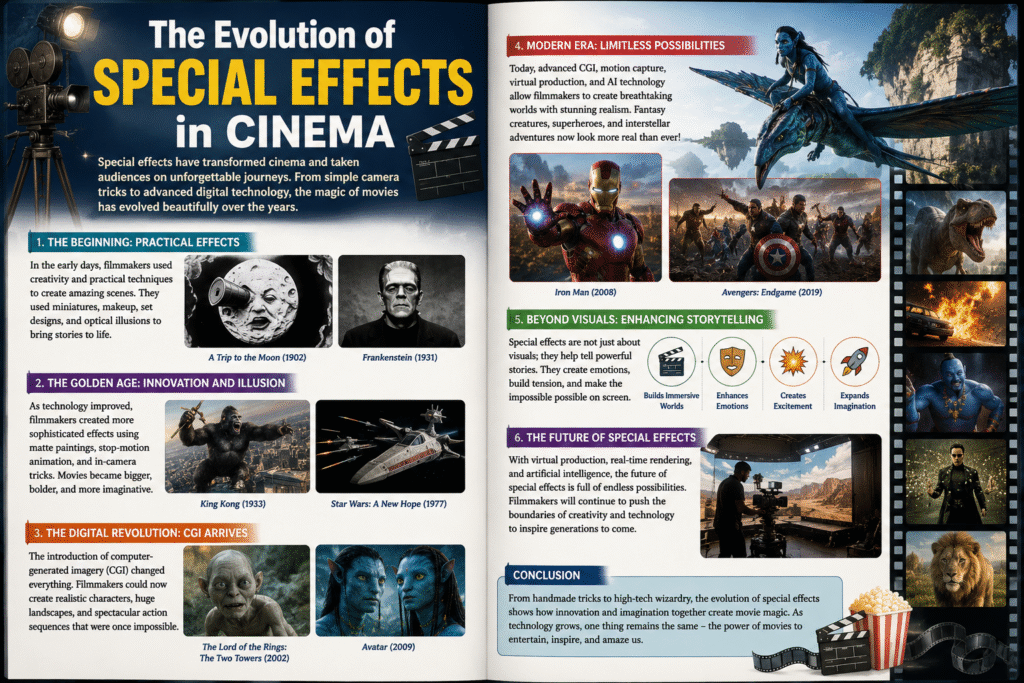
In the early years of cinema, filmmakers relied on practical effects such as makeup, miniatures, optical illusions, and camera tricks to amaze audiences. Simple techniques like double exposure and stop-motion animation brought fantasy and science fiction stories to life. These innovations demonstrated that imagination, combined with creativity, could overcome technological limitations.
As technology advanced, the film industry embraced computer-generated imagery (CGI), which transformed visual storytelling. CGI enabled filmmakers to create realistic creatures, massive battle sequences, and stunning imaginary worlds with incredible detail. Motion-capture technology further enhanced performances by translating actors’ movements into digital characters, making them appear lifelike and emotionally expressive.
Special effects do more than provide visual excitement. They enhance storytelling by helping audiences connect with the emotions, conflicts, and adventures unfolding on screen. Whether depicting natural disasters, futuristic cities, magical kingdoms, or outer-space journeys, visual effects allow viewers to experience stories beyond the boundaries of reality.
The use of special effects has also influenced audience expectations. Modern moviegoers seek immersive cinematic experiences that combine compelling narratives with impressive visuals. Filmmakers continuously innovate to meet these expectations, experimenting with virtual production, advanced animation techniques, and artificial intelligence-driven technologies to push creative boundaries.
However, despite technological progress, special effects are most effective when they support the story rather than overshadow it. The emotional depth of characters and the strength of the narrative remain the heart of every memorable film. Visual effects serve as tools that enhance these elements, creating a perfect balance between technology and storytelling.
Conclusion
The evolution of special effects reflects the limitless creativity of the film industry. From practical tricks used in early cinema to sophisticated digital innovations, special effects have transformed the movie experience and expanded the possibilities of storytelling. As technology continues to advance, filmmakers will discover new ways to inspire wonder and imagination. Yet, the true magic of cinema will always lie in its ability to combine innovation with powerful stories that captivate audiences around the world.