
Music is one of the most powerful emotional tools in filmmaking and content creation. While visuals show the audience what is happening, music shapes how the audience feels about it. A single scene can create completely different emotional experiences depending on the soundtrack behind it. This ability to influence mood, tension, and emotional connection is what makes music such an essential part of storytelling.
In many cases, viewers may not consciously focus on the background score, but they still feel its impact throughout the scene. Music quietly guides emotions, builds atmosphere, creates anticipation, and strengthens immersion. Without it, many scenes would feel empty, emotionally flat, or incomplete.
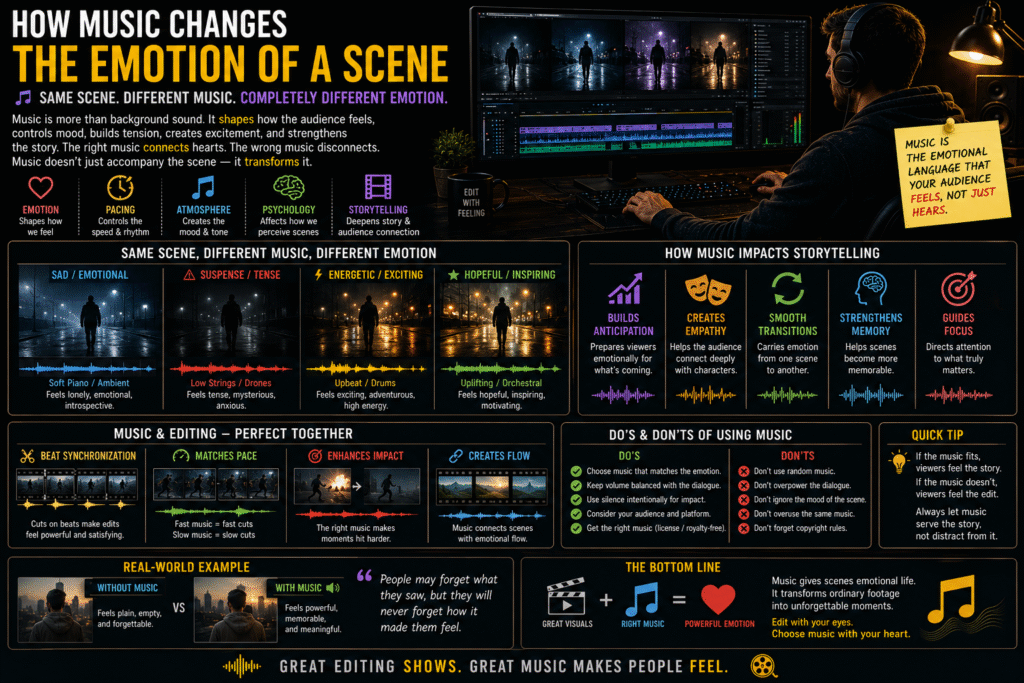
To understand this better, imagine a simple scene where a person walks alone through an empty street at night. If soft piano music is added, the scene may feel emotional or reflective. Replace it with slow, suspenseful music, and the same visuals suddenly become tense and mysterious. Add energetic cinematic beats, and the moment may even feel exciting or adventurous. The visuals remain exactly the same, but the emotional experience changes entirely because of the music.
This happens because music directly affects human psychology. Tempo, rhythm, melody, and tone all influence how audiences emotionally interpret visuals. Slow music often creates calmness, sadness, or emotional depth, while fast-paced music increases urgency, excitement, and energy. Even silence between musical moments can become powerful, building anticipation and dramatic tension.
Music also plays an important role in controlling pacing. In editing, visuals and sound work together to create rhythm. Cuts often feel smoother and more impactful when they align naturally with musical beats. Action scenes become more intense with energetic scores, while emotional scenes gain depth when music allows the audience time to connect with the moment.
Beyond emotion and pacing, music strengthens storytelling by creating atmosphere and identity. Many films, advertisements, and creators use specific musical styles to define the tone of their content. Cinematic orchestral music may create a grand and dramatic feeling, while soft ambient music can make content feel personal and intimate. This relationship between visuals and sound helps audiences remember scenes more deeply.
Another powerful aspect of music is its connection to memory. Many iconic scenes in films remain unforgettable not only because of the visuals, but because of the soundtrack associated with them. A strong musical score can instantly remind audiences of a particular emotion or experience, even years later. Music creates emotional memory in a way that visuals alone often cannot.
Music also helps guide audience expectations before major moments occur. A slow build-up in the soundtrack can signal suspense, while uplifting melodies may create feelings of hope or inspiration. This emotional preparation allows viewers to feel connected to scenes even before dialogue or action fully develops.