
In today’s digital world, trends move faster than ever. One day a certain editing style, sound effect, or video format dominates social media, and the next day it disappears. Many creators constantly chase these trends, believing that following what is popular is the key to success. While trends may bring temporary attention, they rarely create lasting impact. What truly keeps audiences connected over time is storytelling.
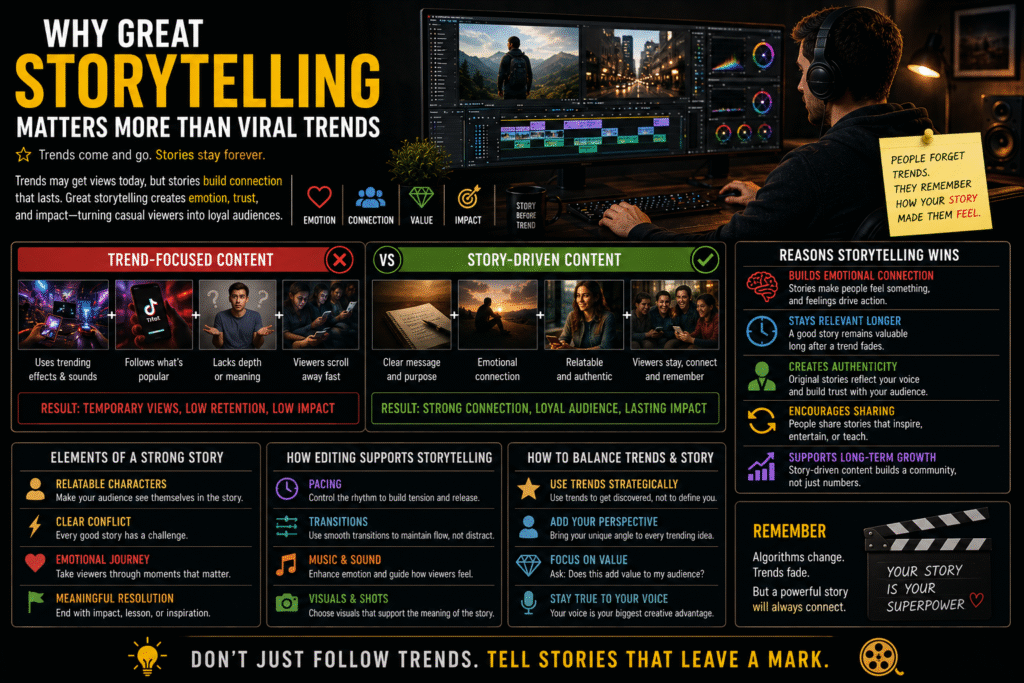
Storytelling is the foundation of meaningful content. It is what gives videos purpose, emotion, and identity. A trend may attract viewers for a moment, but a strong story is what makes them stay, remember, and return. Audiences connect more deeply with content that feels real, relatable, and emotionally engaging than with content that simply follows the latest format.
To understand this better, imagine two creators making similar videos. The first creator uses every trending transition, sound, and visual effect, but the video lacks direction or emotional connection. The second creator uses simple editing but focuses on telling a meaningful story with clear emotion and purpose. While the first video may briefly attract attention, the second is far more likely to leave a lasting impression.
This happens because people naturally respond to stories. A well-told story creates curiosity, emotion, and connection. It gives the audience a reason to continue watching. Without storytelling, even visually impressive videos can feel empty or forgettable.
Another challenge with relying too heavily on trends is that trends quickly become repetitive. When creators continuously imitate popular formats without adding originality, content starts to feel generic. Audiences may recognize the style, but they do not develop a strong connection with the creator behind it. Storytelling, on the other hand, allows creators to build authenticity and individuality.
Strong storytelling also helps content remain relevant beyond short-term trends. A meaningful message, emotional moment, or relatable experience can continue connecting with audiences long after a trend fades away. This is why many timeless films, advertisements, and videos remain memorable even years later—they focus on human emotion rather than temporary popularity.
Editing plays an important role in supporting storytelling. Pacing, transitions, music, and shot selection should all work together to strengthen the narrative instead of distracting from it. Good editing enhances the story, while excessive effects without purpose can weaken it.
In modern content creation, finding balance is important. Trends can help increase visibility, but storytelling is what creates long-term value. The most successful creators are often those who know how to use trends strategically while still maintaining their own voice and narrative style.
Ultimately, audiences may initially click because something is trending, but they continue watching because they feel connected to the story being told.
In the end, trends may capture attention for a moment, but storytelling is what creates lasting impact and meaningful connection.