
In content creation and filmmaking, visuals may capture attention, but emotion is what creates lasting impact. Audiences rarely remember every detail of a video, but they often remember how the content made them feel. Whether it is inspiration, excitement, sadness, curiosity, or motivation, emotional connection is what transforms ordinary videos into meaningful experiences.
Great content is not only about high-quality visuals, advanced editing, or expensive equipment. It is about creating moments that feel human and relatable. When viewers emotionally connect with a story, they become more engaged, more invested, and more likely to remember and share the content.
To understand this better, imagine watching two videos on the same topic. The first video is visually polished but feels cold and disconnected. The second video may use simpler visuals, but it tells a relatable story with genuine emotion and authenticity. Most audiences naturally connect more deeply with the second video because emotion creates trust and relatability.
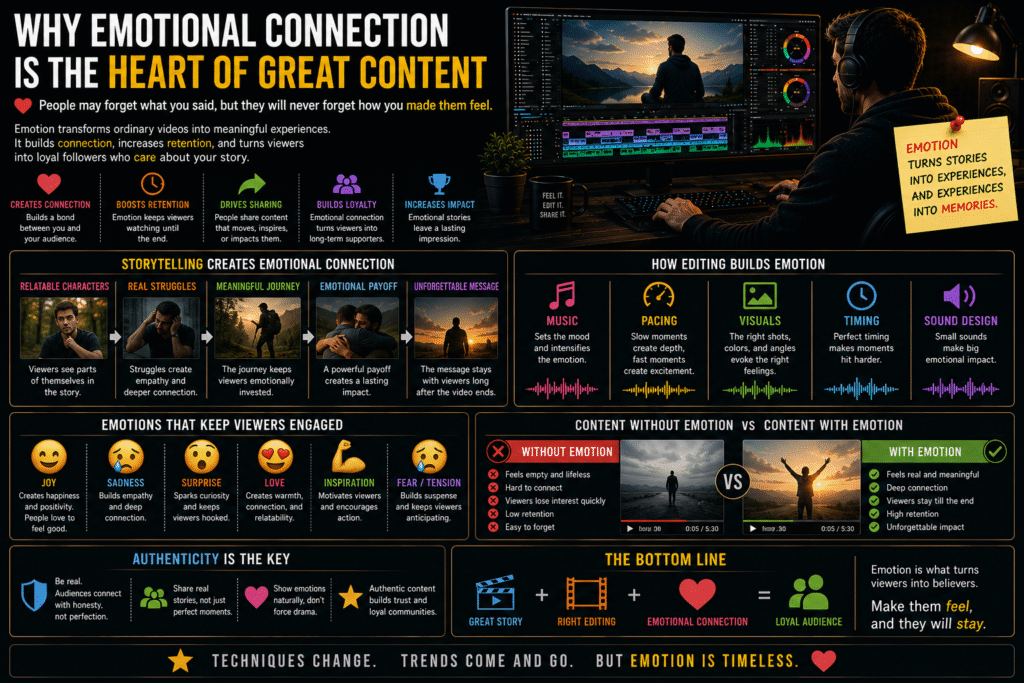
This emotional connection often begins through storytelling. People relate to struggles, achievements, fears, dreams, and experiences that reflect real life. When content mirrors emotions audiences have personally felt, viewers stop feeling like passive observers and begin feeling involved in the story itself.
Editing plays a major role in strengthening this emotional connection. Music, pacing, shot selection, timing, and sound design all influence how viewers emotionally experience content. A slow emotional scene with soft music creates reflection and empathy, while faster pacing and energetic soundtracks can create excitement and motivation. These choices shape the emotional rhythm of the story.
Another reason emotional connection matters is because it increases audience retention. People continue watching content when they feel emotionally invested. Curiosity keeps viewers interested temporarily, but emotion keeps them connected for longer periods. This is why powerful storytelling often outperforms visually impressive but emotionally empty content.
In modern social media and digital content, emotional authenticity has become increasingly important. Audiences are exposed to large amounts of content every day, making it easier to ignore videos that feel generic or artificial. Content that feels honest, personal, and emotionally genuine stands out more because it creates a sense of human connection.
Emotional storytelling also encourages sharing. Viewers are more likely to send videos to others when the content inspires them, motivates them, or emotionally resonates with their experiences. This emotional reaction often becomes more valuable than technical perfection.
However, creating emotional connection does not mean forcing dramatic moments into every video. Subtle emotions are often more effective than exaggerated ones. Small details, natural reactions, silence, music, and authentic storytelling can create stronger impact than excessive emotional manipulation.
Another important aspect is relatability. Audiences connect more deeply when they see parts of themselves within the story. This relatability helps build trust between creators and viewers, turning casual audiences into loyal communities.
Ultimately, emotional connection is what gives content meaning. Without emotion, even visually impressive videos can feel forgettable. Emotion transforms content from something viewers simply watch into something they genuinely experience.
🎯 Conclusion
Great content is not remembered because of effects or visuals alone—it is remembered because of how it makes people feel.
Emotional connection creates trust, engagement, and lasting impact. It keeps audiences invested, strengthens storytelling, and turns ordinary videos into meaningful experiences.
In the end, people may forget specific scenes or words, but they rarely forget the emotions a story created inside them.