
In today’s fast-paced digital world, attention is the most valuable currency. Whether it’s YouTube, Instagram, or any video platform, viewers decide within seconds whether they want to continue watching or move on. Many creators struggle with low watch time and poor engagement, often assuming the problem lies in content or equipment. However, in most cases, the real issue is editing.
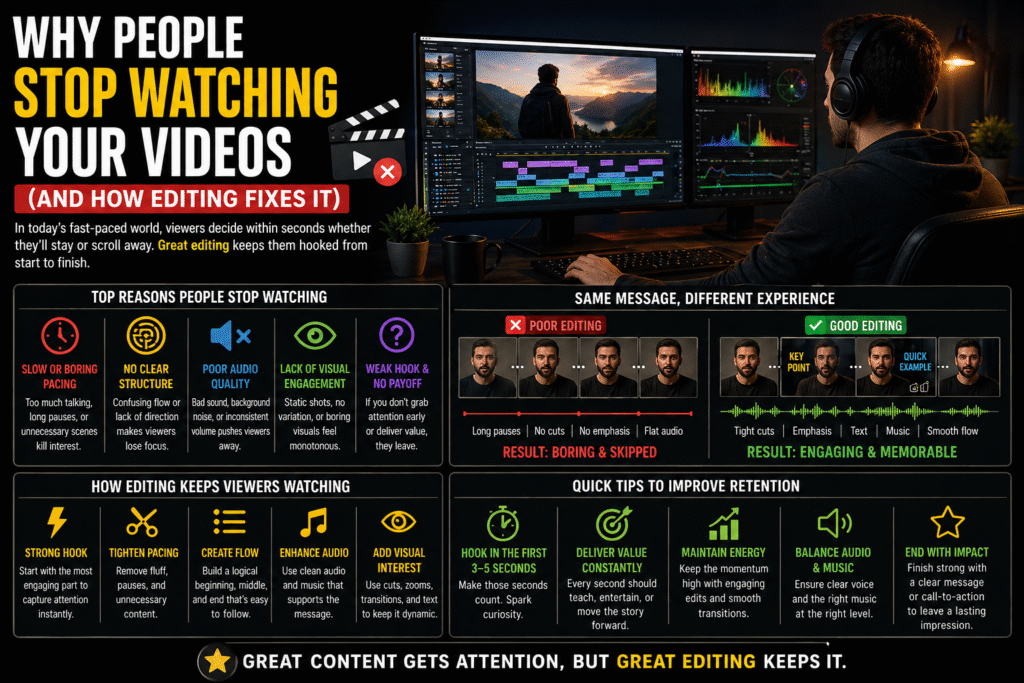
Editing plays a crucial role in holding the viewer’s attention. Even if the idea is strong, poor pacing, unnecessary delays, and lack of structure can quickly make a video feel boring. Viewers don’t wait—they scroll. That’s why the first few seconds of a video are critical. A slow or unclear start can immediately lead to drop-offs.
To understand this better, imagine watching a video that begins with long pauses, repeated sentences, or no clear direction. Within moments, you lose interest. Now compare that to a video that starts with a strong hook, quick cuts, and clear intent. It immediately feels engaging and worth watching. The difference lies in editing, not the idea itself.
One of the biggest reasons people stop watching videos is poor pacing. If scenes drag on too long or include unnecessary content, viewers feel like their time is being wasted. Editing helps remove these weak moments and keeps the flow tight and purposeful. Every second should add value to the viewer.
Another common issue is lack of structure. A video without a clear beginning, middle, and end feels confusing. Good editing organizes content into a logical flow, making it easy to follow and enjoyable to watch. It guides the viewer step by step, ensuring they stay connected throughout.
Audio also plays a significant role. Poor sound quality, inconsistent volume, or lack of background music can make videos feel unprofessional. Clean audio and well-placed music enhance the overall experience and keep viewers engaged.
Visual engagement is equally important. Static shots without variation can feel monotonous. Simple editing techniques like zoom-ins, cuts, transitions, and on-screen text can make content visually dynamic and interesting.
In real-world content, especially short-form videos, editing becomes even more critical. With limited time to capture attention, creators must deliver value quickly and efficiently. Fast pacing, engaging visuals, and clear storytelling are essential to retain viewers.
Beyond the basics of pacing and structure, another critical factor that affects viewer retention is the lack of intentional editing choices. Many creators simply trim clips and arrange them in order, but effective editing requires purpose behind every cut. Each transition, zoom, or pause should serve a reason—either to maintain attention, emphasize a point, or guide the viewer’s focus. Without this intention, videos feel random and unpolished, leading viewers to lose interest quickly.
Another overlooked aspect is the absence of a strong visual rhythm. Just like music has beats, videos also need a rhythm that keeps the audience engaged. When shots remain static for too long or cuts feel inconsistent, the flow breaks. A well-edited video maintains a consistent rhythm through varied shot lengths, subtle movements, and smooth transitions. This creates a viewing experience that feels dynamic and engaging rather than repetitive.
Conclusion
People don’t stop watching because your content is bad—they stop because it doesn’t hold their attention. Editing is what transforms a good idea into an engaging experience.
By improving pacing, structure, audio, and visual flow, editing ensures that viewers stay connected from start to finish. In a world where attention spans are short, strong editing is the key to making your content stand out.
Ultimately, it’s not just about creating videos—it’s about creating videos people actually want to watch.