
In visual storytelling, what the audience sees is not just about composition or clarity—it is also about color. Color grading is one of the most powerful tools in filmmaking and content creation, yet it often goes unnoticed. It is the process of adjusting and enhancing colors in a video to create a specific mood, tone, and visual identity. While viewers may not consciously think about it, color has a direct impact on how they feel and interpret a scene.
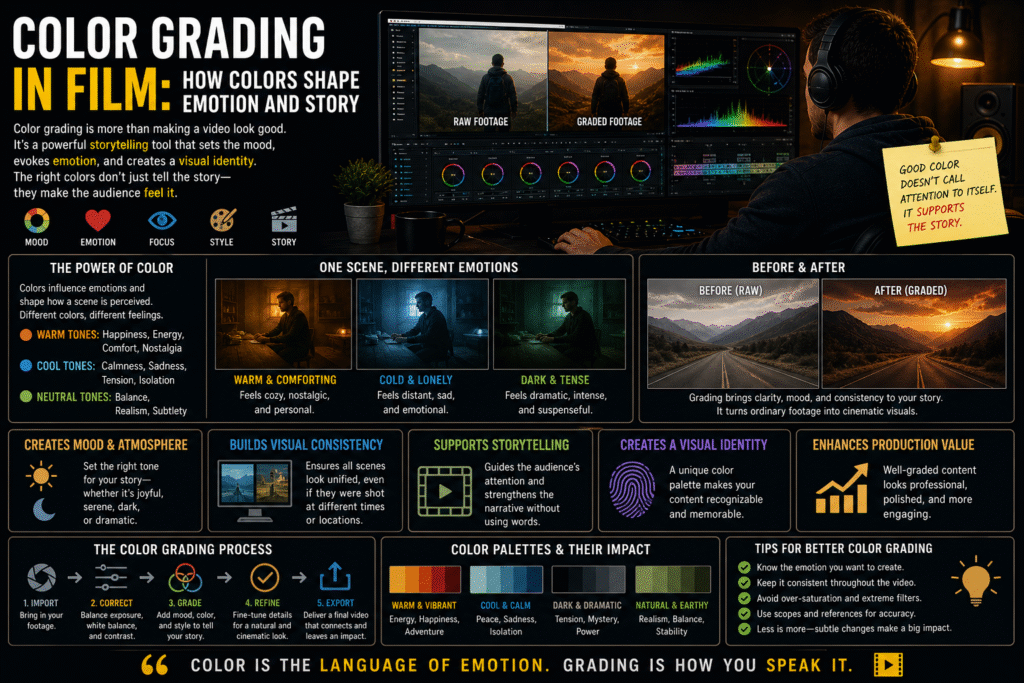
Every color carries an emotional meaning. Warm tones such as orange and yellow often create a sense of comfort, happiness, or nostalgia. In contrast, cooler tones like blue and green can evoke calmness, loneliness, or even tension. By carefully choosing and adjusting these tones, editors and colorists guide the audience’s emotional response without using dialogue or action.
To understand this better, imagine a simple scene of a person sitting alone in a room. If the scene is graded with warm, soft lighting, it may feel peaceful or reflective. However, if the same scene is presented with cold, desaturated tones, it can feel lonely or melancholic. The visuals remain the same, but the emotional impact changes entirely because of color.
Color grading also helps establish consistency throughout a video. Since scenes are often shot at different times and under varying lighting conditions, raw footage may look inconsistent. Through color correction and grading, these differences are balanced, ensuring that the entire video feels cohesive and visually pleasing. This consistency plays a key role in maintaining immersion.
Beyond emotion and consistency, color grading contributes to storytelling by creating a visual identity. Many films and creators use specific color palettes to define their style. This not only makes the content more recognizable but also strengthens the narrative. For example, darker tones may be used in serious or dramatic scenes, while vibrant colors can highlight energy and positivity.
In today’s digital content landscape, color grading is not limited to cinema. It is widely used in YouTube videos, advertisements, and social media content to create a professional look. Even subtle adjustments in contrast, brightness, and saturation can significantly improve the quality of a video.
However, like any creative tool, color grading requires balance. Overuse of filters or extreme color adjustments can make a video feel unnatural or distracting. The goal is not to overpower the visuals, but to enhance them in a way that supports the story.
Ultimately, color grading is more than a technical process—it is a storytelling technique. It shapes how scenes are perceived, influences emotions, and adds depth to the visual experience.
In the end, audiences may not always notice the colors, but they will always feel their impact